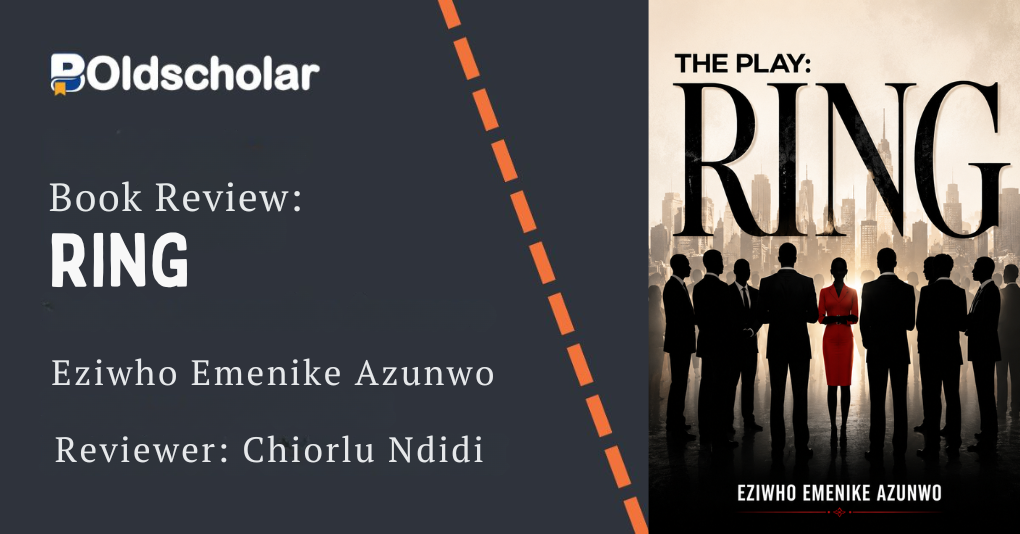
Book Title: The Ring
Author: Dr. Eziwho Emenike Azunwo
Reviewer: Chiorlu Ndidi
Publisher: Covenant Daystar Publishers
Pagination (Number of pages): 43 pages
Year of publication: 2026
Institution: Rivers State University, Port Harcourt
Department: Theatre and Film Studies
Introduction
This play offers a compelling exploration of ambition's dual nature in business and leadership. It highlights how the pursuit of success can blur the lines between aspiration and betrayal, loyalty and treachery. Through the characters of Mr. Eze and Mr. Gide, the story reveals the dangerous transformation of ambition into envy, showing how even trusted relationships can be shattered by choices made in secrecy and driven by unchecked desires.
Azunwo’s used "The Ring" as metaphor for power, legacy, and consequence all connected in a circle. You cannot have power without responsibility, you cannot break loyalty without breaking yourself. And every action made to grab the ring will eventually come back around to you. It’s a perfect title for play about succession, betrayal, and karma. It also sounds like a classic tragedy like The Crown, The Throne, "To be able wear the ring, Eze betrayed the hand that gave it him. Now the ring is wearing him. “
Mr. Gide, a seasoned CEO on the edge of retirement, brings his daughter Rita to the board, he sees only the continuation of his legacy. However, for Mr. Eze, the company's longtime manager, driven by a quest for fame and power, devises a terrifying scheme to destroy his old master and seize the role he feels is rightfully his.
Mr. Eze’s downfall serves as a potent reminder that every choice, especially those shrouded in darkness leaves an indelible mark in the soul and in the world around us. In the end, this play stands as a cautionary tale, a mirror held up to all who seek power at the cost of integrity and loyalty, this play not only entertains thought and self-reflection. But remind us that while ambition can be a force for growth, unchecked ambition untampered by morality and respect can lead only to ruin.
Synopsis
The play centers on a corporate succession crisis, as respected CEO Mr. Gide prepares to retire, he introduces his daughter Rita to the board to secure his legacy. This decision ignites envy in Mr. Eze, a loyal senior manager who believed the top position was his. Driven by ambition, Eze orchestrates his mentor’s death and takes power. However, his victory is short-lived. Guilt, paranoia, and the weight of karma unravel him, leading to the realization that no ambition is worth a corrupted soul
Themes
Ambition & Morality: The central conflict ambition is shown as both a driver of progress and a destroyer when divorced from ethics. Mr. Eze made push the company far hoping to be the CEO soon, but was destroyed because the ambition is not laced with morality.
Betrayal & Loyalty: The mentor-mentee relationship between Gide and Eze is twisted into treachery, questioning workplace. Mr. Gide betrayed Mr. Eze, because even Mr. Gide’s wife suggested Mr. Eze because of his loyalty all these years.
Karma &Justice: No sin goes unpunished, Mr. Eze takes vengeance on his boss for choosing his daughter over, kills Mr. Gide as to take over the leadership of the company. Justice is not delivered by law, but by conscience and consequence.
Legitimacy & Hereditary M. Gide’s decision to hand over the headship to his daughter was based on hereditary, he plans to make family company starting with Rita. While in real sense Mr. Eze deserves the position considering years of service and commitment.
Characterization
Mr. Gide: The archetypal "benevolent CEO Respected, legacy-driven, but perhaps naive about internal politics. His decision to favor blood over merit is the inciting incident.
Mr. Eze: The tragic anti-hero, initially loyal, hardworking, and relatable. His quest for power, fame and entitlement mentality brought his down fall. He is a modern-day Macbeth his ambition corrupts him; his downfall evokes both condemnation and pity.
Rita: She is intelligent and goal getter based on her discussion with her father about her plans after school. She represents continuity, legitimacy, and innocence. She is the catalyst, for which the play
The Board: Represents the system passive observers who enable power struggles by not addressing succession transparently. The characters are well-drawn archetypes that allow the audience to see themselves in a corporate or political setting.
Clara: She is the wife of Mr. Gide, she is portrayed as a good woman who understands work ethic and hierarchical process, she foreshadows Mr. Eze’s end action, when she reminds her husband about Eze’s commitment to the company and wonders why he is not considering him.
Miracle: Mr. Eze’s wife, she represents the good and bad in the society, first she doesn’t see anything wrong in Gide’s plans, again devices mean to help her husband either by hook or crook.
Truth and Justice
The play argues that justice is inevitable, the hands of karma ensure accountability, truth here is internally Eze cannot escape his own conscience, and instead affirms that a corrupted process corrupts the result, he was arrested and meant to feel the full weight of the law.
Social Commentary
Azunwo’s The Ring mirrors today’s Nigerian and global corporate/government workplace politics were battle for Succession and position cannot be over emphasized. This is common in family businesses and politics: Eze’s belief that "years of service would have earned him automatic promotion" reflects a real workplace mindset. His abuse of Power shows how people will destroy anyone in an institution just to be in control. The cost of cutting Corners is a warning to youth and professionals that shortcuts lead to self-destruction. Mr. Eze would have been alive, with pay raise and better opportunities.
Language and Style & Techniques
Diction: Formal and elevated, befitting a corporate/tragic tone. Words like "orchestrates," "untimely," "relentless hands of karma" give it weight. Imagery: "Hands of karma," "shadows," "storm of resentment” creates a dark, foreboding atmosphere
Dramatic Irony: The audience knows Eze is guilty while he pretends to be legitimate CEO. Foreshadowing: Mrs. Clara foreshadows the aftermath of her husband’s decision. Though ntimely killing her husband wasn’t what she thought of.
Moral Aphorism: The closing line "no sin goes unpunished" functions like a Greek chorus. The style is didactic it wants to teach as much as entertain.
Power Struggle and Legitimacy
This is the engine of the plot it was clash of legitimacy & hereditary
Legitimacy& hereditary: Gide Rita, based on blood, trust, and continuity is made CEO.
Meritocratic &Legitimacy: Eze’s claims based on years of service and perceived competence, he deserves to be CEO.
The play critiques Gide for ignoring internal talent over hereditary and Eze believing that long term service entitles him to commit a crime. Azunwo believes that Legitimacy without morality is tyranny while ambition without process brings chaos.
Comparative Perspective
Similar to Shakespeare's Macbeth, a loyal general kills a king or mentor in order to gain the throne; Chinua Achebe's "Things Fall Apart" depicts Okonkwo's ambition and fear of weakness leading to his tragic downfall; Arthur Miller's "Death of a Salesman" depicts the anguish of a faithful employee who is passed over for a promotion; Nigerian Political History: Godfatherism, palace coups, and the notion that "power must be seized."
Conclusion
This is a powerful play with strong relevance to business, politics, and personal ethics. Strengths Clear moral, relatable setting, strong tragic arc, rich themes. Potential With sharp dialogue and symbolic staging shadows, boardroom as throne room this can be very impactful on stage. It succeeds because it’s not just about a company. It’s about the human soul and the price we pay for what we want.
Share this post



Be the first to comment on this post