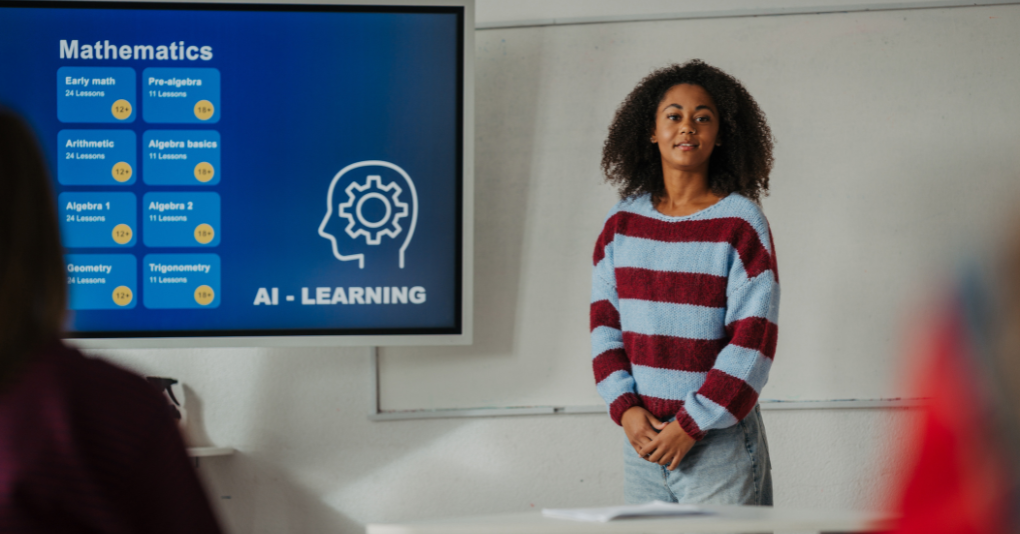
5 Essential EdTech Tools for a Smart Classroom

A smart classroom is ultimately about using the right technology to solve real educational problems.
Sep. 23rd 2026
5 Essential EdTech Tools for a Smart Classroom


For generations, teaching and learning have largely depended on textbooks, chalkboards, notebooks, and face-to-face interaction between teachers and students. While these traditional methods remain important, technology is creating new opportunities to make education more interactive, collaborative, personalized, and accessible.

From Lagos and Abuja to smaller communities across the country, schools are increasingly exploring digital tools that can improve teaching and prepare students for a technology-driven world.

But building a smart classroom does not necessarily mean filling a school with expensive computers, interactive boards, and sophisticated gadgets.

A smart classroom is ultimately about using the right technology to solve real educational problems.

A teacher with a smartphone, a projector, internet access, and the right educational applications can already introduce elements of smart learning into a traditional classroom.


Here are five EdTech tools that can help Nigerian schools take practical steps toward building smarter classrooms.


1. Google Classroom – Bringing Classroom Management Online

Managing assignments, lesson materials, announcements, and student submissions can be challenging, particularly as class sizes increase.

Google Classroom provides teachers with a digital environment where these activities can be organized in one place.

Teachers can create virtual classes, distribute assignments, upload learning resources, ask questions, collect student work, and provide feedback digitally.

For students, this means they can access their learning materials without necessarily waiting until the next physical class.


How Nigerian teachers can use it

Consider a secondary school teacher in Abuja who wants students to read a particular article before the next English lesson.

Instead of photocopying the material for every student, the teacher can upload it to Google Classroom and provide questions for students to answer.

Students can submit their responses online, while the teacher can review them before the next lesson.

This creates an opportunity for blended learning, where physical classroom teaching is supported by digital activities.


Why it matters

Google Classroom can also reduce dependence on paper for certain classroom activities and give students experience using digital productivity tools.

For schools gradually transitioning into digital education, it can provide a relatively straightforward starting point.

Best for: Assignment management, digital resources, communication, feedback, and blended learning.


2. Kahoot! – Making Revision More Fun

One of the biggest challenges facing teachers is keeping students engaged.

After several periods of lectures, note-taking, and traditional classroom exercises, students can easily lose concentration.

This is where Kahoot! and other game-based learning platforms can make lessons more interactive.

Kahoot! allows teachers to create quizzes that students answer using smartphones, tablets, or computers. Questions appear on a shared screen, while students submit their answers through their devices.

The platform provides immediate feedback and introduces game-like elements into classroom activities.


Turning revision into a classroom activity

Imagine a teacher preparing students for WAEC, NECO, or another examination.

Instead of conducting every revision exercise with pen and paper, the teacher could begin a lesson with a 10-question digital quiz.

The results can immediately show which topics students understand and which areas require additional explanation.

For example, if most students answer questions about photosynthesis correctly but struggle with respiration, the teacher has immediate information that can guide the next stage of the lesson.


More than just games

Kahoot! can be used for:

Examination revision

Pre-lesson assessments

Classroom competitions

Knowledge checks

Vocabulary development

Science and mathematics revision

End-of-lesson assessments


The objective should not simply be to determine which student finishes first. The real value lies in using the activity to identify gaps in understanding.


Best for: Revision, quizzes, formative assessment, engagement, and classroom participation.


3. Canva for Education – Making Learning More Visual

Education is increasingly becoming visual.

Students encounter infographics, videos, animations, presentations, and interactive content every day through digital media. Bringing some of these approaches into the classroom can make difficult concepts easier to understand.

Canva for Education provides teachers and students with tools for creating presentations, infographics, posters, worksheets, videos, diagrams, and other educational materials.

And importantly, users do not need to be professional graphic designers.


Imagine a Nigerian history lesson

Instead of asking students to write several pages about Nigeria's independence, a teacher could ask them to create a visual timeline showing important events leading up to independence.

A biology teacher could ask students to create an infographic explaining the human respiratory system.

An entrepreneurship teacher could ask students to design a simple business pitch.

These activities combine academic learning with creativity and digital communication.


Students become creators

This is particularly important because digital literacy goes beyond knowing how to use a smartphone.

Students increasingly need to know how to create, communicate, research, present, and collaborate using digital tools.

Canva can help schools introduce these skills through ordinary classroom assignments.


Best for: Presentations, infographics, visual learning, project-based learning, digital storytelling, and creativity.


4. Microsoft Teams – Connecting Students and Teachers Beyond the Classroom

The classroom does not have to end when the school bell rings.

Microsoft Teams for Education can support communication and collaboration between teachers and students beyond physical classroom hours.

Teachers can share resources, communicate with students, organize assignments, facilitate discussions, collaborate on documents, and conduct virtual lessons where infrastructure permits.


A practical use case

A teacher could create a digital class group where students receive announcements and learning materials.

Students working on a group project could collaborate on shared documents rather than having to meet physically every time.

Teachers could also provide additional learning resources for students who want to study beyond the standard classroom curriculum.

This can be particularly useful for schools experimenting with hybrid or blended learning.


Preparing students for the workplace

There is another reason digital collaboration tools matter.

The workplace students enter after graduation may look very different from the traditional office environment.

Remote meetings, shared documents, digital project management, cloud platforms, and online collaboration are increasingly common across many industries.

Introducing students to responsible digital collaboration early can therefore help build practical digital skills.


Best for: Collaboration, communication, virtual learning, group projects, and blended education.


5. AI-Powered Learning Tools 

Artificial intelligence may be the most transformative technology currently entering education.

AI-powered tools can help teachers develop lesson plans, generate practice questions, create differentiated learning materials, explain difficult concepts, brainstorm activities, and provide writing support.

Tools such as ChatGPT and other AI-enabled educational platforms can potentially function as teaching assistants, provided they are used responsibly.


One classroom, different learning needs

One of the biggest challenges teachers face is that students do not learn at exactly the same pace.

In a class of 40 or 50 students, some may understand a concept immediately while others may require several additional explanations.

AI can help teachers create different versions of learning materials.

For example, a teacher introducing a difficult science concept could generate:

Basic: A simplified explanation for students who are struggling.

Standard: A normal classroom explanation.

Advanced: Additional questions and applications for students who have already mastered the concept.

This can help teachers provide more differentiated learning without having to create every resource entirely from scratch.


Students can also use AI as a learning assistant

When properly guided, students can use AI to:

Ask questions about difficult topics

Generate practice questions

Explore different explanations

Brainstorm ideas

Improve writing

Practice problem-solving

Summarize information for further study


However, Nigerian schools will also need to address the risks.

AI can produce inaccurate information, and students may be tempted to use it to complete assignments without actually learning.

Schools therefore need to teach responsible AI use.

Students should understand that asking AI for an answer is not the same as understanding the answer.

The teacher's role remains essential.


The Future of the Nigerian Classroom

The future of education in Nigeria is likely to involve an increasingly blended relationship between traditional teaching and digital technology.

Students will continue to learn from teachers in physical classrooms while also accessing digital resources, online assessments, collaborative platforms, AI-powered learning assistants, educational videos, and digital libraries.

The schools that benefit most from this transformation will not necessarily be those that purchase the most technology.

They will be the schools that understand how technology can solve real learning problems.

For Nigerian educators, the smart classroom should therefore not be about chasing every new EdTech trend.

It should be about asking a simple question:

How can this technology help my students learn better?

When that question guides technology adoption, even a modestly equipped classroom can become a smarter classroom.


Final Thoughts

EdTech is not the future of education—it is already becoming part of the present.

From managing assignments and creating interactive quizzes to developing visual resources, facilitating collaboration, and exploring personalized AI-assisted learning, digital tools are changing what is possible inside and outside the classroom.

For Nigerian schools, the journey does not have to begin with expensive infrastructure.

It can begin with one teacher, one classroom, one problem, and one useful digital tool.

The smart classroom is not defined by how much technology it contains. It is defined by how effectively technology is used to improve learning.

Share this post

0 Comment

    Be the first to comment on this post

Leave a comment

More Blog Posts
Image Jun 24th. 2026

38 Year Old Breaks The Mold in Becoming Youngest Professor in UNIILORIN

 The University of Ilorin has introduced its youngest professor, identifying Lukman Abdulrauf a......

Continue Reading

Image Jun 3rd. 2026

School Kidnappings in Nigeria: A Threat to Education and National Development

 Nigeria's education sector continues to face one of its greatest challenges in recent history:......

Continue Reading

Image May 14th. 2026

LASU, UNILAG Named Most Preferred Universities for 2026 Admissions

 Lagos State University (LASU) has once again emerged as the most sought-after institution in N......

Continue Reading

Image Apr 23rd. 2026

Balancing Tech Access and Screen Time in Nigerian Educational Ecosystem

 In today’s digital age, Nigerian children are encountering technology earlier than ever before......

Continue Reading

--> 5 Essential EdTech Tools for a Smart Classroom - Boldscholar News

5 Essential EdTech Tools for a Smart Classroom

A smart classroom is ultimately about using the right technology to solve real educational problems.
Sep. 23rd 2026
5 Essential EdTech Tools for a Smart Classroom


For generations, teaching and learning have largely depended on textbooks, chalkboards, notebooks, and face-to-face interaction between teachers and students. While these traditional methods remain important, technology is creating new opportunities to make education more interactive, collaborative, personalized, and accessible.

From Lagos and Abuja to smaller communities across the country, schools are increasingly exploring digital tools that can improve teaching and prepare students for a technology-driven world.

But building a smart classroom does not necessarily mean filling a school with expensive computers, interactive boards, and sophisticated gadgets.

A smart classroom is ultimately about using the right technology to solve real educational problems.

A teacher with a smartphone, a projector, internet access, and the right educational applications can already introduce elements of smart learning into a traditional classroom.


Here are five EdTech tools that can help Nigerian schools take practical steps toward building smarter classrooms.


1. Google Classroom – Bringing Classroom Management Online

Managing assignments, lesson materials, announcements, and student submissions can be challenging, particularly as class sizes increase.

Google Classroom provides teachers with a digital environment where these activities can be organized in one place.

Teachers can create virtual classes, distribute assignments, upload learning resources, ask questions, collect student work, and provide feedback digitally.

For students, this means they can access their learning materials without necessarily waiting until the next physical class.


How Nigerian teachers can use it

Consider a secondary school teacher in Abuja who wants students to read a particular article before the next English lesson.

Instead of photocopying the material for every student, the teacher can upload it to Google Classroom and provide questions for students to answer.

Students can submit their responses online, while the teacher can review them before the next lesson.

This creates an opportunity for blended learning, where physical classroom teaching is supported by digital activities.


Why it matters

Google Classroom can also reduce dependence on paper for certain classroom activities and give students experience using digital productivity tools.

For schools gradually transitioning into digital education, it can provide a relatively straightforward starting point.

Best for: Assignment management, digital resources, communication, feedback, and blended learning.


2. Kahoot! – Making Revision More Fun

One of the biggest challenges facing teachers is keeping students engaged.

After several periods of lectures, note-taking, and traditional classroom exercises, students can easily lose concentration.

This is where Kahoot! and other game-based learning platforms can make lessons more interactive.

Kahoot! allows teachers to create quizzes that students answer using smartphones, tablets, or computers. Questions appear on a shared screen, while students submit their answers through their devices.

The platform provides immediate feedback and introduces game-like elements into classroom activities.


Turning revision into a classroom activity

Imagine a teacher preparing students for WAEC, NECO, or another examination.

Instead of conducting every revision exercise with pen and paper, the teacher could begin a lesson with a 10-question digital quiz.

The results can immediately show which topics students understand and which areas require additional explanation.

For example, if most students answer questions about photosynthesis correctly but struggle with respiration, the teacher has immediate information that can guide the next stage of the lesson.


More than just games

Kahoot! can be used for:

Examination revision

Pre-lesson assessments

Classroom competitions

Knowledge checks

Vocabulary development

Science and mathematics revision

End-of-lesson assessments


The objective should not simply be to determine which student finishes first. The real value lies in using the activity to identify gaps in understanding.


Best for: Revision, quizzes, formative assessment, engagement, and classroom participation.


3. Canva for Education – Making Learning More Visual

Education is increasingly becoming visual.

Students encounter infographics, videos, animations, presentations, and interactive content every day through digital media. Bringing some of these approaches into the classroom can make difficult concepts easier to understand.

Canva for Education provides teachers and students with tools for creating presentations, infographics, posters, worksheets, videos, diagrams, and other educational materials.

And importantly, users do not need to be professional graphic designers.


Imagine a Nigerian history lesson

Instead of asking students to write several pages about Nigeria's independence, a teacher could ask them to create a visual timeline showing important events leading up to independence.

A biology teacher could ask students to create an infographic explaining the human respiratory system.

An entrepreneurship teacher could ask students to design a simple business pitch.

These activities combine academic learning with creativity and digital communication.


Students become creators

This is particularly important because digital literacy goes beyond knowing how to use a smartphone.

Students increasingly need to know how to create, communicate, research, present, and collaborate using digital tools.

Canva can help schools introduce these skills through ordinary classroom assignments.


Best for: Presentations, infographics, visual learning, project-based learning, digital storytelling, and creativity.


4. Microsoft Teams – Connecting Students and Teachers Beyond the Classroom

The classroom does not have to end when the school bell rings.

Microsoft Teams for Education can support communication and collaboration between teachers and students beyond physical classroom hours.

Teachers can share resources, communicate with students, organize assignments, facilitate discussions, collaborate on documents, and conduct virtual lessons where infrastructure permits.


A practical use case

A teacher could create a digital class group where students receive announcements and learning materials.

Students working on a group project could collaborate on shared documents rather than having to meet physically every time.

Teachers could also provide additional learning resources for students who want to study beyond the standard classroom curriculum.

This can be particularly useful for schools experimenting with hybrid or blended learning.


Preparing students for the workplace

There is another reason digital collaboration tools matter.

The workplace students enter after graduation may look very different from the traditional office environment.

Remote meetings, shared documents, digital project management, cloud platforms, and online collaboration are increasingly common across many industries.

Introducing students to responsible digital collaboration early can therefore help build practical digital skills.


Best for: Collaboration, communication, virtual learning, group projects, and blended education.


5. AI-Powered Learning Tools 

Artificial intelligence may be the most transformative technology currently entering education.

AI-powered tools can help teachers develop lesson plans, generate practice questions, create differentiated learning materials, explain difficult concepts, brainstorm activities, and provide writing support.

Tools such as ChatGPT and other AI-enabled educational platforms can potentially function as teaching assistants, provided they are used responsibly.


One classroom, different learning needs

One of the biggest challenges teachers face is that students do not learn at exactly the same pace.

In a class of 40 or 50 students, some may understand a concept immediately while others may require several additional explanations.

AI can help teachers create different versions of learning materials.

For example, a teacher introducing a difficult science concept could generate:

Basic: A simplified explanation for students who are struggling.

Standard: A normal classroom explanation.

Advanced: Additional questions and applications for students who have already mastered the concept.

This can help teachers provide more differentiated learning without having to create every resource entirely from scratch.


Students can also use AI as a learning assistant

When properly guided, students can use AI to:

Ask questions about difficult topics

Generate practice questions

Explore different explanations

Brainstorm ideas

Improve writing

Practice problem-solving

Summarize information for further study


However, Nigerian schools will also need to address the risks.

AI can produce inaccurate information, and students may be tempted to use it to complete assignments without actually learning.

Schools therefore need to teach responsible AI use.

Students should understand that asking AI for an answer is not the same as understanding the answer.

The teacher's role remains essential.


The Future of the Nigerian Classroom

The future of education in Nigeria is likely to involve an increasingly blended relationship between traditional teaching and digital technology.

Students will continue to learn from teachers in physical classrooms while also accessing digital resources, online assessments, collaborative platforms, AI-powered learning assistants, educational videos, and digital libraries.

The schools that benefit most from this transformation will not necessarily be those that purchase the most technology.

They will be the schools that understand how technology can solve real learning problems.

For Nigerian educators, the smart classroom should therefore not be about chasing every new EdTech trend.

It should be about asking a simple question:

How can this technology help my students learn better?

When that question guides technology adoption, even a modestly equipped classroom can become a smarter classroom.


Final Thoughts

EdTech is not the future of education—it is already becoming part of the present.

From managing assignments and creating interactive quizzes to developing visual resources, facilitating collaboration, and exploring personalized AI-assisted learning, digital tools are changing what is possible inside and outside the classroom.

For Nigerian schools, the journey does not have to begin with expensive infrastructure.

It can begin with one teacher, one classroom, one problem, and one useful digital tool.

The smart classroom is not defined by how much technology it contains. It is defined by how effectively technology is used to improve learning.

Share this post

0 Comment

    Be the first to comment on this post

Leave a comment

More Blog Posts
Image Jun 24th. 2026

38 Year Old Breaks The Mold in Becoming Youngest Professor in UNIILORIN

 The University of Ilorin has introduced its youngest professor, identifying Lukman Abdulrauf a......

Continue Reading

Image Jun 3rd. 2026

School Kidnappings in Nigeria: A Threat to Education and National Development

 Nigeria's education sector continues to face one of its greatest challenges in recent history:......

Continue Reading

Image May 14th. 2026

LASU, UNILAG Named Most Preferred Universities for 2026 Admissions

 Lagos State University (LASU) has once again emerged as the most sought-after institution in N......

Continue Reading

Image Apr 23rd. 2026

Balancing Tech Access and Screen Time in Nigerian Educational Ecosystem

 In today’s digital age, Nigerian children are encountering technology earlier than ever before......

Continue Reading

-->