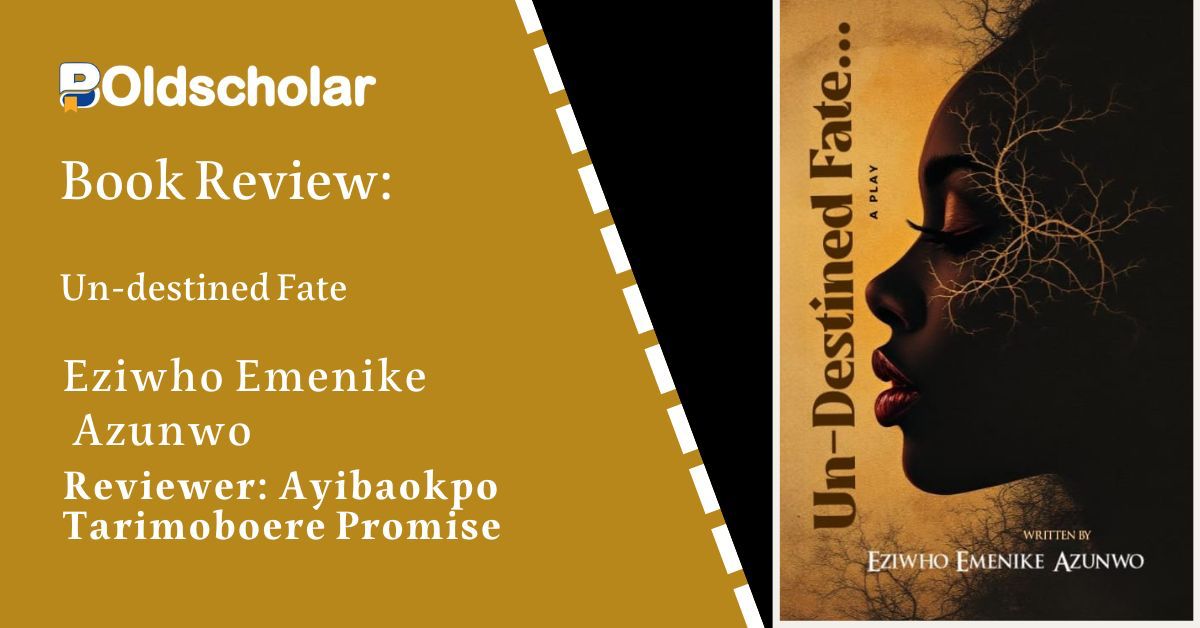
Book Title: Un-destined Fate
Author: Dr. Eziwho Emenike Azunwo
Reviewer: Ayibaokpo Tarimoboere Promise
Publisher: Covenant Daystar Publishers
Pagination (number of pages): 68 pages
Year of Publication: 2026
Institution: Rivers State University, Port Harcourt,
Department of Theatre and Film Studies.
INTRODUCTION
"Un-Destined Fate" is a tragic play that explores the devastating consequences of rejection, pain, and unresolved trauma on family relationships. Regina, born out of wedlock, suffers a life of neglect and bitterness as her mother, Rita, struggles to show love due to her own past wounds. The play's climax revolves around Rita's husband's attempted rape of Regina, which sparks a chain reaction of blame, denial, and ultimately, rejection. Through a poignant narrative, the play highlights the cyclical nature of trauma, the fragility of family bonds, and the haunting question of whether one's fate is predetermined.
SYNOPSIS
Regina, born out of wedlock, suffers a life of rejection and neglect. Her father, Okechukwu, denied responsibility for Rita's pregnancy, leading to Rita's exile from her family. Despite Mazi Ofor's intervention, Rita's past wounds fester, rendering her incapable of loving Regina. As Regina grows, she becomes a victim of neglect and bitterness. The climax arrives when Uche, Rita's husband, attempts to rape Regina. Instead of empathy, Rita accuses Regina of lying and throws her out. Regina finds solace with Oke. As the truth unfolds, Rita's family confronts her, but she denies and shifts blame, the confrontation exposes Rita's toxicity. Rita's rejection breaks Regina, leaving her questioning her fate and who designed such fate for her. The story masterfully conveys the devastating impact of family rejection and the complexities of human relationships.
THEMES
Rejection and Abandonment: Regina's life is marked by rejection from her mother Rita, leading to feelings of worthlessness and bitterness.
Trauma and Cycle of Pain: Rita's unresolved trauma and pain are passed down to Regina, perpetuating a cycle of hurt and rejection.
Dysfunctional Family Dynamics: The play highlights the complexities and flaws of family relationships, where love and support are lacking.
Fate and Personal Responsibility: Regina's narrative raises questions about whether one's fate is predetermined or shaped by personal choices.
Motherhood and Neglect: Rita's inability to love and care for Regina serves as a stark portrayal of neglectful motherhood.
Identity and Belonging: Regina's struggles to find her place and identity are exacerbated by her family's rejection.
CHARACTERIZATION
Mazi Ibe – Mazi Ibe is a man of dignity and warmth. As a respected elder, he embodies tradition, yet his compassion makes him approachable. The weight of family shame weighs on him, and he struggles with how to reconcile the values he holds dear with the complexities of the flaws of his dear ones. His journey is one of forgiveness, seeking to heal fractures while staying true to himself.
Mrs. Ibe – Mazi Ibe's wife is a pillar of love and strength. Patient and enduring, she guides with gentle wisdom, her love for Mazi Ibe and their family unwavering. Though emotions sometimes overwhelm her, her devotion to her family remains her guiding light.
Rita (Mrs. Rita) – Mazi Ibe's daughter and Regina's mother, is a complex blend of strength and pain. Proud and strong-willed, she doesn't shy away from confrontation, often speaking her mind without filter. But beneath her tough exterior lies a wound: the memory of being denied by Oke while pregnant with Regina.This unresolved hurt festers into a grudge, causing Rita to distance herself emotionally from Regina. Her pain manifests as withdrawal, leaving Regina craving the motherly love she struggles to receive.
Regina – Regina is fragile, her innocence bruised by pain and betrayal. Seeking validation, she gravitates toward her father, Oke, craving the love and protection only he can provide.
Okechukwu (Oke) – Oke's a man who's made mistakes but he's trying to make amends. He's stepped up for Regina, being the steady presence she needs. His love for her is like a shield, protecting her from life's hurts. Despite his past, he's determined to be there for her, giving her the love and safety she deserve.
Mr. Uche – He is Rita's husband, and he is a tough man. He's strict and controlling, with a suspicious nature that makes Regina feel uneasy. He doesn't really get Regina or try to understand her, making their relationship strained.
Mazi Ofor – He is the glue that holds everyone together. As a family friend and mediator, he is all about keeping the peace, using his humility and tact to smooth out conflicts. He didn't dissert Rita when his son Oke denied her pregnancy.
Chorus/Drummers – Provide musical and emotional commentary; accentuate tension, drama, and transitions between scenes.
LANGUAGE AND STYLE
The language used is English language with a blend of the Igbo cultural elements, the use of Igbo names and titles like "Mazi" adds a rich cultural layer to the play, grounding it in Nigerian heritage. It is interesting that the play is written in English, as it makes the story more accessible to a broader audience while still honoring the characters' Igbo roots. The blend of Igbo names and English language creates a unique cultural flavor, highlighting the complexities of identity and cultural heritage in Nigeria. The play "Un-Destined Fate" employs a realistic and naturalistic style, focusing on the harsh realities of life and the complexities of human relationships.
DRAMATIC TECHNIQUES
The narrative is characterized by:
Emotional intensity: The play explores intense emotions, such as pain, rejection, anger, and sadness, creating a powerful emotional impact on the audience.
Naturalistic dialogue: The dialogue is naturalistic, reflecting everyday conversation and the authentic voices of the characters.
Family drama: The play revolves around family conflicts, and betrayals, making it a classic example of family drama.
Social realism: The narrative highlights social issues, such as domestic violence, child abuse, and the consequences of societal pressures on individuals.
Symbolic setting: The setting, Mazi Ibe's house, serves as a symbol of tradition, family, and cultural values, contrasting with the brokenness and dysfunction within the family.
Character-driven plot: The story is driven by the characters' actions, motivations, and emotions, rather than external events or plot twists.
Overall, the style of the play is characterized by its emotional intensity, realistic dialogue, and exploration of complex social issues, making it a powerful and thought-provoking drama.
SOCIETAL - COMMENTARY
The play explores socio-family dynamics, highlighting issues like neglect, rejection, dysfunctional family dynamics, identity and belonging, highlighting how different people face different fates. Through Regina's challenges, the play raises questions about accountability, prompting audiences to reflect on the circumstances that led to her situation. Ultimately, "Un-destined Fate" serves as a cautionary tale, offering insights into preventing similar traumas and sparking reflection on family and societal issues.
CRITICAL EVALUATION STRENGTHS
Cultural authenticity: The use of Igbo names and titles adds a rich cultural layer, showcasing Nigerian heritage.
Universal themes: The story tackles universal themes like family rejection, trauma, and identity, making it relatable.
Emotional impact: The tragic events and character struggles create a powerful emotional resonance.
Complex characters: The characters' complexities and flaws make them believable and engaging.
Thought-provoking title: "Un-Destined Fate" aptly captures the play's themes and tone, inviting reflection.
Accessible storytelling: The use of English language makes the story accessible to a broad audience.
Authentic dialogue: The blend of Igbo names and English language creates a unique cultural flavor, adding to the narrative's authenticity.
WEAKNESS
The play "Un-destined fate" could have benefited from incorporating Igbo language to enhance its cultural authenticity, given the Igbo setting and names. This would have added a layer of depth and immersion. For example, characters could have spoken Igbo phrases or dialogues, with translations for non-Igbo speakers. This blend of languages would have made the play more vibrant and true to its roots. Nevertheless, it is a captivating story.
CONCLUSION
The play "Un-destined Fate" ends with Regina shattered, left grappling with the harsh realities of her existence. Rita's inability to love and her toxic behavior have devastating consequences, leaving Regina to grapple with her identity and purpose. The play concludes with Regina's poignant question: Who designed this fate for her? The audience is left to ponder the complexities of human relationships, the lasting impact of trauma, and the resilience of the human spirit. Regina's story serves as a powerful reminder of the importance of love, acceptance, and healing. The play's conclusion is a thought-provoking commentary on the human condition, leaving a lasting impression on the audience.
REFERENCES
Azunwo, E. E. (2026). Un-destined Fate: A play. Port Harcourt: Covenant Daystar Publishers.
Share this post



Be the first to comment on this post