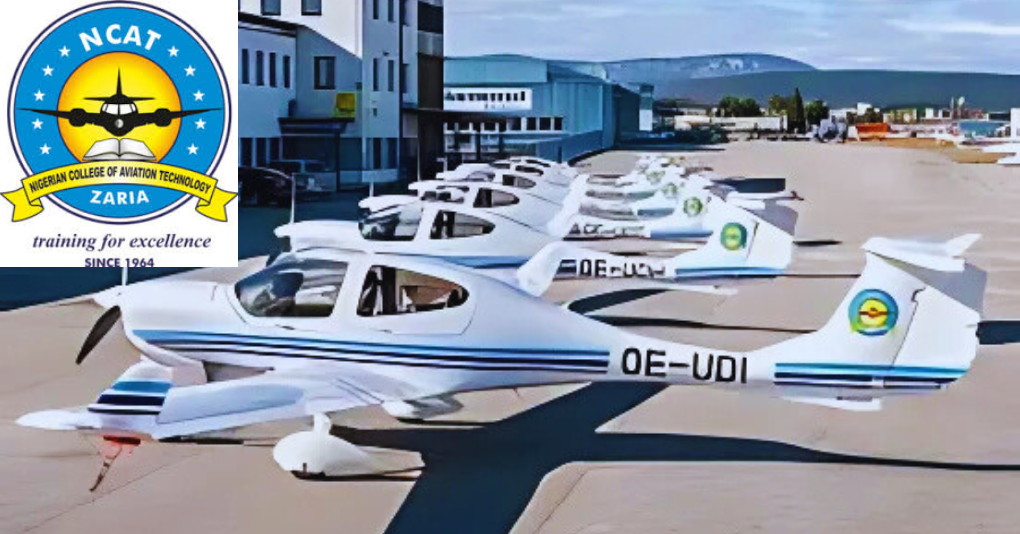
The Managing Director of the Nigerian Airspace Management Agency (NAMA), Farouk Ahmed, said 20 Air Traffic Controllers (ATCs) have graduated from the Nigerian College of Aviation Technology (NCAT) and military schools in Kaduna.
He also stated that 25 ATCs have been certified by the regulatory authority in the last three months, adding that they are currently attached to NAMA to enhance air safety.
He disclosed this in Abuja at the weekend during the first-quarter stakeholders’ engagement on presidential priorities and ministerial deliverables for 2026 convened by the Ministry of Aviation and Aerospace Development.
On the achievements of NAMA in the first quarter of this year, the NAMA boss, who was represented by the Director of Air Traffic Services at NAMA, Mr. John Tayo said: “It has always been in the news that we have a shortage of Air Traffic Controllers. To close the gap, we just graduated 20 air traffic controllers from NCAT and military school in Kaduna.
“We also got certification from Nigeria Civil Aviation Authority (NCAA). Between January and now, we have certified 25 ATCs in NAMA and they all have their licenses and are performing their functions”.
He added that a proficiency check was conducted for almost 150 ATCs to check their activities.
As part of measures to ensure air safety and also cope with the epileptic power supply in the country, he said, “We are all familiar with the power problem of this country. We have deployed solar power to 32 airports to address power challenges.”
The Minister of Aviation and Aerospace Development, Festus Keyamo also hinted that the aviation sector is poised for growth with a five-point agenda aimed at enhancing safety, supporting local airlines, and improving infrastructure.
Keyamo while emphasising the sector’s role in driving economic growth and national integration, noted that the implementation of the agenda has already yielded benefits, including collaboration with Boeing Company for aircraft leasing.
He said, “The present administration is firmly anchored on the renewed hope agenda with an emphasis on good governance, accountability and sustainable development. Within this framework, the aviation sector stands as a vital driver of economic growth, job creation and national integration.
“I am pleased to state that the implementation of the agenda has already yielded significant benefits. Notably, it facilitated collaboration between the ministry and Boeing Company for aircraft leasing to support the sector.
“This agenda has provided clear strategic direction, aligned innovation activities with national development goals and fostered stronger industry-wide collaboration and partnerships. Furthermore, it has established a robust framework for accountability, enabling us to monitor progress, optimise resource allocation and enhance public confidence in the sector.”
The representative of the Director-General of the Nigerian Civil Aviation Agency (NCAA), Capt. Chris Najomo at the meeting stated that, as part of efforts to strengthen infrastructure safety and operational compliance, the Authority recently certified Kano and Port Harcourt International Airports.
He said, “As part of our efforts to strengthen infrastructure safety and operational compliance, the Authority successfully certified Kano International Airport and Port Harcourt International Airport, issuing aerodrome certificates in the last quarter of 2025.
“This achievement brings the total number of certified international airports in Nigeria to four, reflecting steady progress in meeting global aerodrome certification standards”.
Share this post




Be the first to comment on this post