Kano State, like Jigawa and Katsina, is currently facing a severe educational crisis, and consistently ranking as one of the states with the highest number of out-of-school children in the country. As of last month, out-of-school figures show that nearly 1 million children in Kano are currently not attending school. Along with Jigawa and Katsina, Kano contributes nearly 30% of the national total figure of 18.3 million out-of-school children. Widespread poverty is forcing many parents in the state to prioritise survival over schooling, often leading children into the labour market or street hawking and informal education system.
The state government is currently dismantling the idea of children being unnecessarily enrolled under the Almajiri System – a prevalent traditional system of Islamic education that often operates outside the formal school structure, leaving millions without foundational literacy or numeracy skills.
According to the state government, the alarming figure of 989,234 out-of-school children in the state threatens to rob an entire generation of their right to education and a brighter future. Hence, the nighttime sweeps across Kano metropolis among other programmes in which children found sleeping under bridges, in gutters or uncompleted buildings were taken for rehabilitation.
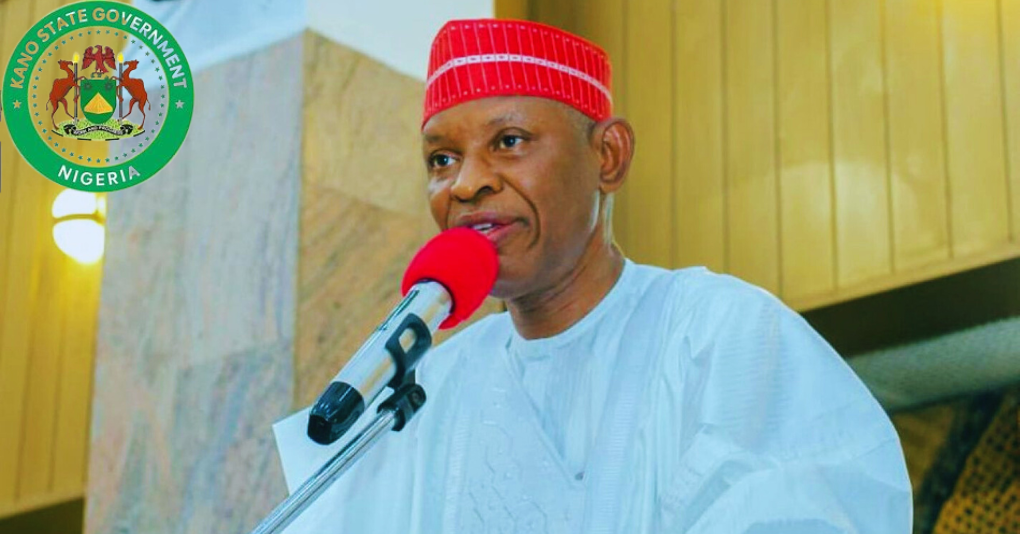
Kano State Governor Abba Kabir Yusuf’s approach to taking Almajiri children off the streets has focused on rescue, rehabilitation and formal education, rather than mass deportation, when compared to his predecessor Abdullahi Umar Ganduje’s approach.
To achieve this, Yusuf allocated 31 percent of the total budget of last year and about 30 percent this year to education, exceeding UNESCO’s recommended benchmark of 15 to 20 percent of total public expenditure on education. Yusuf’s 30 percent allocation has been highlighted as one of the highest subnational commitments to education in the country.
The governor said an alarming proliferation of 989,234 out-of-school children of both genders, a situation that threatens to rob an entire generation of their right to education and a brighter future, inspired him to take the bull by horns.
Early last year, the Hisbah Board carried out nighttime sweeps across Kano metropolis. Children found sleeping under bridges, in gutters or uncompleted buildings were taken to the Hajj Camp for rehabilitation.
The plan was to provide medical screening, three meals daily, and a mix of formal and Quranic education, with promises of support “up to tertiary level”.
In one major sweep between 1 a.m. and 4 a.m., over 200 children were moved to the Hajj Camp rehabilitation centre. About 231 children remained at the Mariri camp awaiting family reunification.
The government set up a multi-agency committee that includes the National Human Rights Commission (NHRC), National Agency for the Prohibition of Trafficking in Persons (NAPTIP), and the Kano State Ministry of Women Affairs to monitor the programme. Officials justify the rescue under the constitution, the Child Rights Act, and Kano’s Child Protection Law, arguing that leaving children on the street violates their rights.
Free education as prevention of out-of-school crisis
The Yusuf administration declared a State of Emergency on Education in June 2024 and had rolled out a free education policy since 2023.
“The statistics are grim and the faces of these out-of-school children, devoid of the promise of learning, haunt us as a collective failure,” the governor had stated while declaring state of emergency on education.
Yusuf did not just wake up that day to declare a state of emergency on education. He studied the situation and understood the problems and the solution, he said, “is to enroll the children in school.”
The administration is providing free school uniforms worth N1.1 billion for primary one pupils for the 2025/2026 session. The administration distributed 1.3 million free uniforms and free JAMB forms for 10,000 students every year. Last year alone, it paid exam fees for over 141,000 students for NECO, NABTEB, and NBAIS.
Yusuf said the idea is to make formal schooling accessible so parents do not send children to informal Almajiri schools where they often end up begging.
Operational problem gaps
Part of the programme, which focuses on rehabilitation and reintegration, however, has faced operational gaps. While Hisbah handles the rescue, the Ministry of Women Affairs raised concerns about the lack of structured case management and family tracing.
Nearly 70 percent of the rescued children are reportedly not from Kano but from neighboring states and even Niger, Chad, and Cameroon. That complicates repatriation and reintegration.
Sustainability is also an issue. Feeding and housing more than 200 children requires steady funding, with temporary federal support and NGO help covering some costs.
The Almajiri effort ties into Yusuf’s wider “Safe Corridor Initiative” and education reforms aimed at reducing youth restiveness, drug abuse and street crimes. His 2025 budget dedicates over 30 percent to education, and he has also allocated funds for youth empowerment, including street hawkers.
Also, Hisbah – the Sharia police in Kano – views the raids as a humanitarian duty to get children off dangerous streets. But child protection experts argue that there is need for proper psychosocial support, family tracing, and a long-term integration plan rather than just shelter and food.
Hisbah Board Deputy Commander-General Mujahideen Abubakar, while announcing the policy, explained: “We have decided to keep them at the Hajj Camp and give them proper education. Some of them can be supported up to tertiary level.”
NHRC Kano State Coordinator Abdullahi Shehu, who is a member of the multi-agency committee overseeing the programme, defended the rescue on legal and humanitarian grounds. He said: “Leaving children on the street is a violation of their rights. The government does not need parental consent to rescue them if it is in the child’s best interest.”
The move by Kano State government to rid the state of out-of-school children is understandable.
The state, Jigawa, and Katsina have been identified as states with the highest number of out-of-school children crisis as UNICEF stressed that urgent investment in early childhood education remained critical to turning the tide.
According to UNICEF, Nigeria currently accounts for about 18.3 million out-of-school children, the highest number globally.
An education consultant with UNICEF Kano Field Office, Aisha Abdullahi, noted that the states alone contribute nearly 30 per cent of the figure, driven by poverty, insecurity, cultural barriers, and poor school readiness.
Abdullahi stressed that Early Childhood Care, Development and Education (ECCDE) offers a strategic and long-term solution, capable of preventing children from falling out of the education system before they even begin.
She emphasised that tackling the crisis requires a shift from reactive interventions to preventive strategies, with early childhood education forming the bedrock of lifelong learning.
“Early childhood education is not just a preparatory stage but a strategic intervention to reduce the number of out-of-school children,” Abdullahi said.
According to her, ECCDE targets children from birth to age five, equipping them with essential cognitive, emotional and social skills needed to thrive in formal schooling.
She noted that children exposed to early learning are significantly more likely to enroll in school, stay longer and complete their education, while those who miss such opportunities are twice as likely to drop out.
Abdullahi cited research indicating that nearly 90 per cent of brain development occurs before the age of five, making early learning a critical window for intervention.
Despite policy provisions incorporating one year of pre-primary education into Nigeria’s Universal Basic Education framework, she observed that access to ECCDE remains limited, particularly in rural communities.
She added that areas with functional ECCDE centres record up to 40 per cent higher enrolment into Primary One, alongside improved retention rates.
The UNICEF expert also highlighted the role of early childhood education in advancing girls’ education, noting that early exposure helps delay societal pressures such as early marriage, while strengthening parental engagement, especially among mothers.
However, stakeholders have expressed concern over the low involvement of fathers in early learning, revealing that less than 15 per cent actively participate across the region.
They noted that increasing male involvement could cut dropout rates by up to 50 per cent, given fathers’ influence in household decisions, and recommended community advocacy, mosque engagement and structured father-child programmes to bridge the gap.
Share this post





Be the first to comment on this post