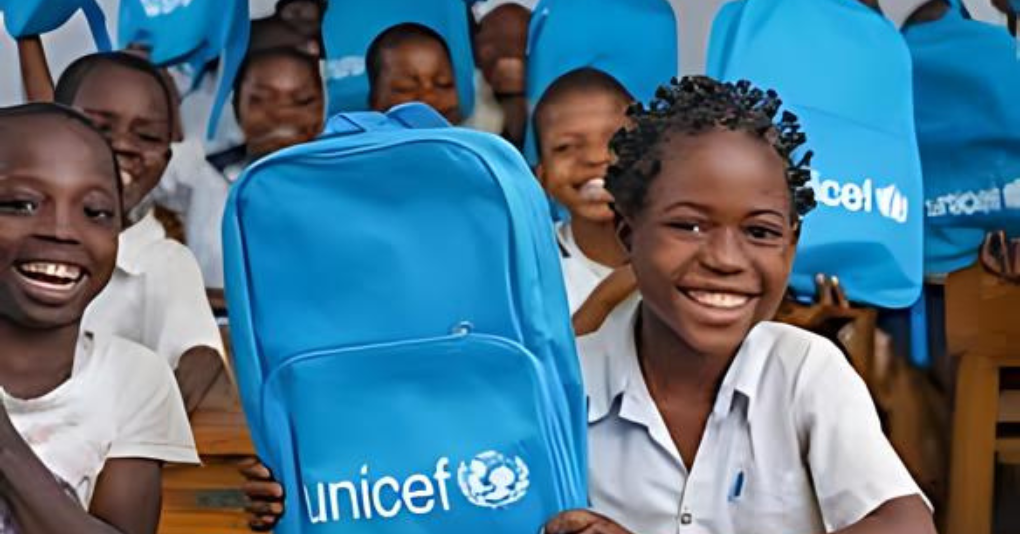
UNICEF Discloses Shocking Stats Revealing 72% of Pupils in Borno, Yobe, Adamawa Can’t Read

As Nigeria marked the 2025 Children’s Day, the United Nations Children’s Fund (UNICEF) has raised concerns over the state of children’s welfare in the North-East, revealing that 72 per cent of pupils who complete primary school in Borno, Adamawa and Yobe states cannot read basic text.
May. 28th 2025
UNICEF Discloses Shocking Stats Revealing 72% of Pupils in Borno, Yobe, Adamawa Can’t Read


As Nigeria marked the 2025 Children’s Day, the United Nations Children’s Fund (UNICEF) has raised concerns over the state of children’s welfare in the North-East, revealing that 72 per cent of pupils who complete primary school in Borno, Adamawa and Yobe states cannot read basic text.

Speaking during a press conference in Maiduguri on Tuesday, Joseph Senesie, Chief of the UNICEF Maiduguri Field Office, said pupil in northeast can’t read; the situation — as alarming, warning that millions of children across the region are still denied access to their most basic rights.

He noted that an estimated 2 million children remain out of school across the northeast and warned that 12 local government areas in Borno and Yobe continue to report high numbers of unvaccinated children, leaving them vulnerable to preventable diseases.

Senesie reminded the public of the grim realities facing children in Nigeria’s conflict-affected region, describing them as the country’s “most neglected yet most invaluable resource.”

“Our children remain Nigeria’s greatest treasure,” he declared. “Yet the vast majority are still without legal identity, education, healthcare, and protection.”

He said the theme of this year’s celebration — “Tapping the Untapped Natural Treasure” — serves as a call to action for all stakeholders. “Our children are our future, yet far too many remain invisible, unprotected, and underserved,” he said.

According to him, only 3 in 10 children in Borno, Yobe, and Adamawa have had their births officially registered. This, he explained, denies them legal identity and excludes them from essential services such as healthcare, education, and social protection.

“Are we truly unlocking the potential of our children — our untapped treasures?” he asked. “Or are we allowing systemic neglect to rob them of their future?”

Despite the challenges, Senesie acknowledged the progress made by state governments. He praised the implementation of the Child Protection Law, open defecation-free declarations in five local government areas, and Borno State’s N100 million contribution to the Child Nutrition Fund. He also commended the inauguration of 27 Local Government Committees on Food and Nutrition as significant steps forward.

“These are commendable milestones that reflect leadership and political will,” he said. “But we must not rest. The work is far from over.”

Senesie urged government officials, civil society organisations, and development partners to intensify efforts to close existing gaps in nutrition, immunisation, child protection, sanitation, and education.

He reaffirmed UNICEF’s commitment to these goals, disclosing that in 2024 alone, nearly 600,000 children in the northeast were treated for severe acute malnutrition, 2.48 million under-five children received vitamin A supplements, and 1.2 million were immunised with the pentavalent vaccine.

He expressed appreciation to UNICEF’s international partners — including BMZ (Germany), the UK’s FCDO, SIDA, the EU, Norway, Canada, GPE, and ECW — for their sustained support.

UNICEF, he vowed, will remain a voice for every child, working closely with governments and partners to ensure that children in northeast Nigeria not only survive but thrive and realise their full potential.

He appealed to the media to continue amplifying children’s voices, urging journalists to see themselves as “not just observers, but advocates, guardians, and change agents

Share this post

0 Comment

    Be the first to comment on this post

Leave a comment

More Blog Posts
Image Sep 9th. 2026

UNESCO International Literacy Prizes 2026 Reward Six Impactful Initiatives

 Six outstanding literacy programmes from Colombia, Lebanon, Mexico, Kingdom of the Netherlands......

Continue Reading

Image Sep 9th. 2026

Defence Academy Set to Graduate 444 Cadets, 3,064 Postgraduates

 The Nigerian Defence Academy will graduate 444 cadets of the 73 Regular Course and 3,064 postg......

Continue Reading

Image Sep 9th. 2026

Wave of ASUU Strike Hits UNIZIK as Academic Staff Down Tools

 The Academic Staff Union of Universities has commenced an indefinite strike at Nnamdi Azikiwe......

Continue Reading

Image Sep 9th. 2026

Nigerian Government Pledges to Return over One million Out-of-School Children to classrooms in 20 Months

 The federal government has announced that more than one million out-of-school children have re......

Continue Reading

--> UNICEF Discloses Shocking Stats Revealing 72% of Pupils in Borno, Yobe, Adamawa Can’t Read - Boldscholar News

UNICEF Discloses Shocking Stats Revealing 72% of Pupils in Borno, Yobe, Adamawa Can’t Read

As Nigeria marked the 2025 Children’s Day, the United Nations Children’s Fund (UNICEF) has raised concerns over the state of children’s welfare in the North-East, revealing that 72 per cent of pupils who complete primary school in Borno, Adamawa and Yobe states cannot read basic text.
May. 28th 2025
UNICEF Discloses Shocking Stats Revealing 72% of Pupils in Borno, Yobe, Adamawa Can’t Read


As Nigeria marked the 2025 Children’s Day, the United Nations Children’s Fund (UNICEF) has raised concerns over the state of children’s welfare in the North-East, revealing that 72 per cent of pupils who complete primary school in Borno, Adamawa and Yobe states cannot read basic text.

Speaking during a press conference in Maiduguri on Tuesday, Joseph Senesie, Chief of the UNICEF Maiduguri Field Office, said pupil in northeast can’t read; the situation — as alarming, warning that millions of children across the region are still denied access to their most basic rights.

He noted that an estimated 2 million children remain out of school across the northeast and warned that 12 local government areas in Borno and Yobe continue to report high numbers of unvaccinated children, leaving them vulnerable to preventable diseases.

Senesie reminded the public of the grim realities facing children in Nigeria’s conflict-affected region, describing them as the country’s “most neglected yet most invaluable resource.”

“Our children remain Nigeria’s greatest treasure,” he declared. “Yet the vast majority are still without legal identity, education, healthcare, and protection.”

He said the theme of this year’s celebration — “Tapping the Untapped Natural Treasure” — serves as a call to action for all stakeholders. “Our children are our future, yet far too many remain invisible, unprotected, and underserved,” he said.

According to him, only 3 in 10 children in Borno, Yobe, and Adamawa have had their births officially registered. This, he explained, denies them legal identity and excludes them from essential services such as healthcare, education, and social protection.

“Are we truly unlocking the potential of our children — our untapped treasures?” he asked. “Or are we allowing systemic neglect to rob them of their future?”

Despite the challenges, Senesie acknowledged the progress made by state governments. He praised the implementation of the Child Protection Law, open defecation-free declarations in five local government areas, and Borno State’s N100 million contribution to the Child Nutrition Fund. He also commended the inauguration of 27 Local Government Committees on Food and Nutrition as significant steps forward.

“These are commendable milestones that reflect leadership and political will,” he said. “But we must not rest. The work is far from over.”

Senesie urged government officials, civil society organisations, and development partners to intensify efforts to close existing gaps in nutrition, immunisation, child protection, sanitation, and education.

He reaffirmed UNICEF’s commitment to these goals, disclosing that in 2024 alone, nearly 600,000 children in the northeast were treated for severe acute malnutrition, 2.48 million under-five children received vitamin A supplements, and 1.2 million were immunised with the pentavalent vaccine.

He expressed appreciation to UNICEF’s international partners — including BMZ (Germany), the UK’s FCDO, SIDA, the EU, Norway, Canada, GPE, and ECW — for their sustained support.

UNICEF, he vowed, will remain a voice for every child, working closely with governments and partners to ensure that children in northeast Nigeria not only survive but thrive and realise their full potential.

He appealed to the media to continue amplifying children’s voices, urging journalists to see themselves as “not just observers, but advocates, guardians, and change agents

Share this post
0 Comment

    Be the first to comment on this post

Leave a comment

More Blog Posts
Image Sep 9th. 2026

UNESCO International Literacy Prizes 2026 Reward Six Impactful Initiatives

 Six outstanding literacy programmes from Colombia, Lebanon, Mexico, Kingdom of the Netherlands......

Continue Reading

Image Sep 9th. 2026

Defence Academy Set to Graduate 444 Cadets, 3,064 Postgraduates

 The Nigerian Defence Academy will graduate 444 cadets of the 73 Regular Course and 3,064 postg......

Continue Reading

Image Sep 9th. 2026

Wave of ASUU Strike Hits UNIZIK as Academic Staff Down Tools

 The Academic Staff Union of Universities has commenced an indefinite strike at Nnamdi Azikiwe......

Continue Reading

Image Sep 9th. 2026

Nigerian Government Pledges to Return over One million Out-of-School Children to classrooms in 20 Months

 The federal government has announced that more than one million out-of-school children have re......

Continue Reading

-->