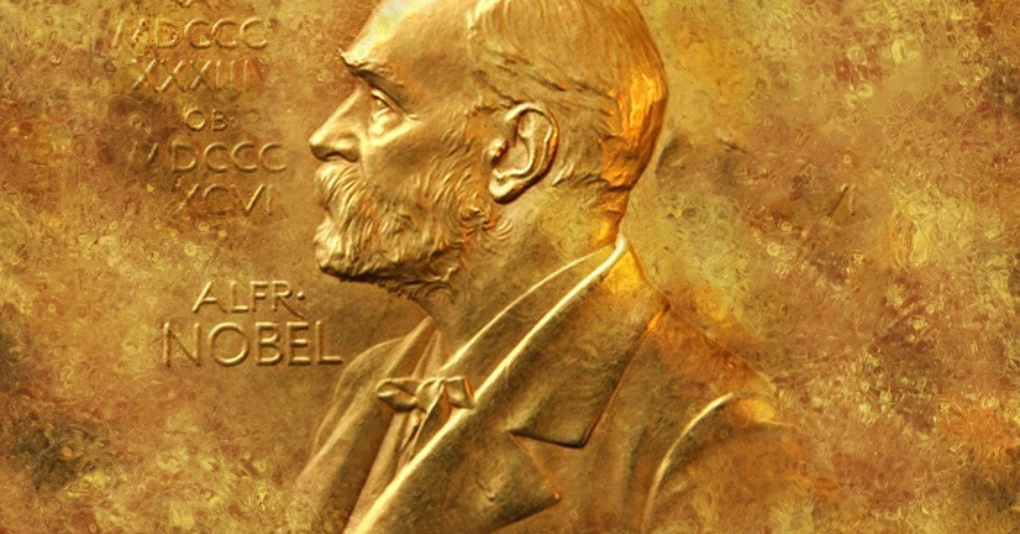
Three Scientist to Share 2025 Nobel Prize in Physiology or Medicine

Mary E. Brunkow, Fred Ramsdell and Shimon Sakaguchi are awarded the Nobel Prize in Physiology or Medicine 2025 for their groundbreaking discoveries concerning peripheral immune tolerance that prevents the immune system from harming the body.
Oct. 7th 2025
Three Scientist to Share 2025 Nobel Prize in Physiology or Medicine


The Nobel Assembly at Karolinska Institute has decided to award the 2025 Nobel Prize in Physiology or Medicine to:


Mary E. Brunkow

Institute for Systems Biology,

Seattle, USA

Fred Ramsdell

Sonoma Biotherapeutics,

San Francisco, USA

Shimon Sakaguchi

Osaka University,

Osaka, Japan


“For their discoveries concerning peripheral immune tolerance”

They discovered how the immune system is kept in check.

The body’s powerful immune system must be regulated, or it may attack our own organs. Mary E. Brunkow, Fred Ramsdell and Shimon Sakaguchi are awarded the Nobel Prize in Physiology or Medicine 2025 for their groundbreaking discoveries concerning peripheral immune tolerance that prevents the immune system from harming the body.

Every day, our immune system protects us from thousands of different microbes trying to invade our bodies. These all have different appearances, and many have developed similarities with human cells as a form of camouflage. So how does the immune system determine what it should attack and what it should defend?

Mary Brunkow, Fred Ramsdell and Shimon Sakaguchi are awarded the Nobel Prize in Physiology or Medicine 2025 for their fundamental discoveries relating to peripheral immune tolerance. The laureates identified the immune system’s security guards, regulatory T cells, which prevent immune cells from attacking our own body.

“Their discoveries have been decisive for our understanding of how the immune system functions and why we do not all develop serious autoimmune diseases,” says Olle Kämpe, chair of the Nobel Committee.

Shimon Sakaguchi was swimming against the tide in 1995, when he made the first key discovery. At the time, many researchers were convinced that immune tolerance only developed due to potentially harmful immune cells being eliminated in the thymus, through a process called central tolerance. Sakaguchi showed that the immune system is more complex and discovered a previously unknown class of immune cells, which protect the body from autoimmune diseases.

Mary Brunkow and Fred Ramsdell made the other key discovery in 2001, when they presented the explanation for why a specific mouse strain was particularly vulnerable to autoimmune diseases. They had discovered that the mice have a mutation in a gene that they named Foxp3. They also showed that mutations in the human equivalent of this gene cause a serious autoimmune disease, IPEX.

Two years after this, Shimon Sakaguchi was able to link these discoveries. He proved that the Foxp3 gene governs the development of the cells he identified in 1995. These cells, now known as regulatory T cells, monitor other immune cells and ensure that our immune system tolerates our own tissues.

The laureates’ discoveries launched the field of peripheral tolerance, spurring the development of medical treatments for cancer and autoimmune diseases. This may also lead to more successful transplantations. Several of these treatments are now undergoing clinical trials.

Share this post

0 Comment

    Be the first to comment on this post

Leave a comment

More Blog Posts
Image Sep 16th. 2026

Customs Commits N70bn to Education Related CSR Nationwide

 The Nigeria Customs Service (NCS) has committed about N70 billion to Corporate Social Responsi......

Continue Reading

Image Sep 16th. 2026

Katsina Approves N31m Funding for Early Childhood Education

 The Katsina State Government has approved N31 million for the training of early childhood educ......

Continue Reading

Image Sep 16th. 2026

Zamfara Conducts CBT for 6,412 Applicants to Foster Growth of Quality Primary Education

 The Zamfara State Government scheduled a Computer-Based Test (CBT) for thousands of candidates......

Continue Reading

Image Sep 16th. 2026

TETFund Commissions Third ICT Centre in Tertiary Institution.

 The Tertiary Education Trust Fund (TETFund) has cited the third N1 billion Information Communi......

Continue Reading

--> Three Scientist to Share 2025 Nobel Prize in Physiology or Medicine - Boldscholar News

Three Scientist to Share 2025 Nobel Prize in Physiology or Medicine

Mary E. Brunkow, Fred Ramsdell and Shimon Sakaguchi are awarded the Nobel Prize in Physiology or Medicine 2025 for their groundbreaking discoveries concerning peripheral immune tolerance that prevents the immune system from harming the body.
Oct. 7th 2025
Three Scientist to Share 2025 Nobel Prize in Physiology or Medicine


The Nobel Assembly at Karolinska Institute has decided to award the 2025 Nobel Prize in Physiology or Medicine to:


Mary E. Brunkow

Institute for Systems Biology,

Seattle, USA

Fred Ramsdell

Sonoma Biotherapeutics,

San Francisco, USA

Shimon Sakaguchi

Osaka University,

Osaka, Japan


“For their discoveries concerning peripheral immune tolerance”

They discovered how the immune system is kept in check.

The body’s powerful immune system must be regulated, or it may attack our own organs. Mary E. Brunkow, Fred Ramsdell and Shimon Sakaguchi are awarded the Nobel Prize in Physiology or Medicine 2025 for their groundbreaking discoveries concerning peripheral immune tolerance that prevents the immune system from harming the body.

Every day, our immune system protects us from thousands of different microbes trying to invade our bodies. These all have different appearances, and many have developed similarities with human cells as a form of camouflage. So how does the immune system determine what it should attack and what it should defend?

Mary Brunkow, Fred Ramsdell and Shimon Sakaguchi are awarded the Nobel Prize in Physiology or Medicine 2025 for their fundamental discoveries relating to peripheral immune tolerance. The laureates identified the immune system’s security guards, regulatory T cells, which prevent immune cells from attacking our own body.

“Their discoveries have been decisive for our understanding of how the immune system functions and why we do not all develop serious autoimmune diseases,” says Olle Kämpe, chair of the Nobel Committee.

Shimon Sakaguchi was swimming against the tide in 1995, when he made the first key discovery. At the time, many researchers were convinced that immune tolerance only developed due to potentially harmful immune cells being eliminated in the thymus, through a process called central tolerance. Sakaguchi showed that the immune system is more complex and discovered a previously unknown class of immune cells, which protect the body from autoimmune diseases.

Mary Brunkow and Fred Ramsdell made the other key discovery in 2001, when they presented the explanation for why a specific mouse strain was particularly vulnerable to autoimmune diseases. They had discovered that the mice have a mutation in a gene that they named Foxp3. They also showed that mutations in the human equivalent of this gene cause a serious autoimmune disease, IPEX.

Two years after this, Shimon Sakaguchi was able to link these discoveries. He proved that the Foxp3 gene governs the development of the cells he identified in 1995. These cells, now known as regulatory T cells, monitor other immune cells and ensure that our immune system tolerates our own tissues.

The laureates’ discoveries launched the field of peripheral tolerance, spurring the development of medical treatments for cancer and autoimmune diseases. This may also lead to more successful transplantations. Several of these treatments are now undergoing clinical trials.

Share this post
0 Comment

    Be the first to comment on this post

Leave a comment

More Blog Posts
Image Sep 16th. 2026

Customs Commits N70bn to Education Related CSR Nationwide

 The Nigeria Customs Service (NCS) has committed about N70 billion to Corporate Social Responsi......

Continue Reading

Image Sep 16th. 2026

Katsina Approves N31m Funding for Early Childhood Education

 The Katsina State Government has approved N31 million for the training of early childhood educ......

Continue Reading

Image Sep 16th. 2026

Zamfara Conducts CBT for 6,412 Applicants to Foster Growth of Quality Primary Education

 The Zamfara State Government scheduled a Computer-Based Test (CBT) for thousands of candidates......

Continue Reading

Image Sep 16th. 2026

TETFund Commissions Third ICT Centre in Tertiary Institution.

 The Tertiary Education Trust Fund (TETFund) has cited the third N1 billion Information Communi......

Continue Reading

-->