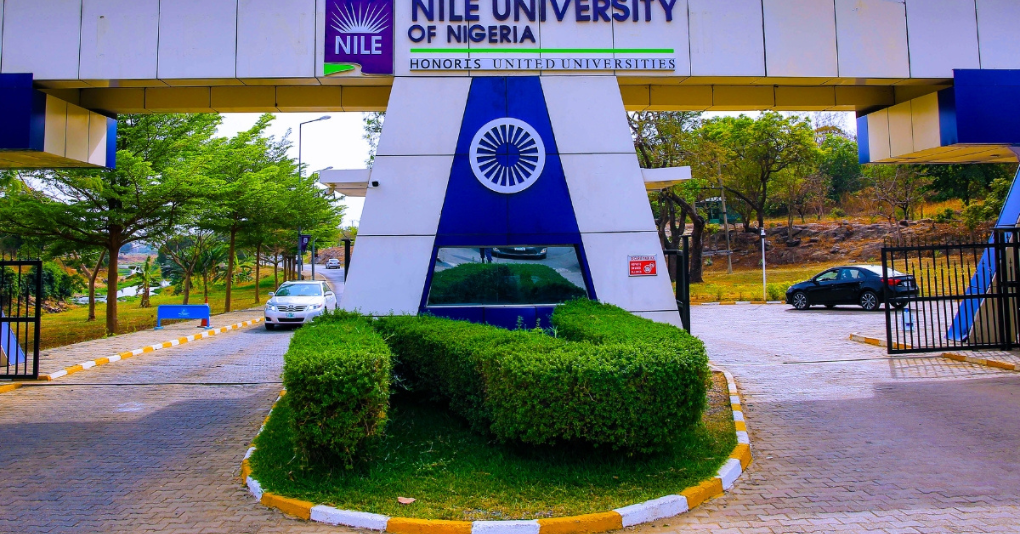
Nile University of Nigeria has intensified efforts to bridge Nigeria’s growing skills gap by expanding vocational training, entrepreneurship programs, and industry partnerships aimed at preparing students for the modern workforce.
The university’s Vice Chancellor, Prof. Dilli Dogo, said the institution goes beyond traditional academic certification to equipping students with practical skills that can improve employability and drive economic growth.
According to Prof. Dogo, who marked his fourth anniversary as Nile University VC this month, higher education in the 21st century must go beyond awarding degrees to producing graduates who can compete globally and contribute meaningfully to industry.
“Education today is not just about certificates,” he said. “It is about ensuring that graduates have the skills, aptitude and practical knowledge needed to solve real-world problems.”
The Vice Chancellor noted that the overemphasis on certificates in the modern day at the expense of vocational training has contributed to the current skills deficit in the country, with many technical jobs now dominated by foreign artisans.
Over the past four years, he stated, the university has expanded its entrepreneurship and innovation initiatives through incubation hubs that train students to develop startups and build sustainable businesses.
Students are exposed to practical business development training and encouraged to become employers of labour rather than job seekers after graduation.
In addition, the university has strengthened partnerships with international organisations and technology companies to enhance skills training.
For instance, Nile University collaborates with EC-Council University, a United States–based cybersecurity certification institution, allowing students to obtain internationally recognised cybersecurity certifications while still in school.
The university has also partnered with Vega IT, a human resource provider from Serbia, which has established a centre and runs paid internship programmes on campus where students gain practical industry experience and, in some cases, secure employment before graduation.
According to the Vice Chancellor, Prof. Dilli Dogo, these initiatives have helped improve graduate employability, with the university consistently reporting an average employability rate of almost 90 percent.
Nile University has also introduced practical innovation projects aimed at combining education with environmental sustainability.
The French Embassy donated a fabrication laboratory (FabLab) and a mini factory to Nile University. The FabLab allows students to design and build prototypes while learning modern manufacturing techniques. The mini factory enables them to convert plastic waste into semi-finished and finished products, giving them hands-on experience in manufacturing and environmental management.
The Vice Chancellor said the university’s approach is designed to align higher education with the needs of industry and national development.
He added that by equipping students with both academic knowledge and practical skills, universities can help reduce unemployment and support economic growth in Nigeria.
“Our goal is to produce graduates who are not only academically qualified but also capable of creating value wherever they find themselves,” he said.
Share this post




Be the first to comment on this post