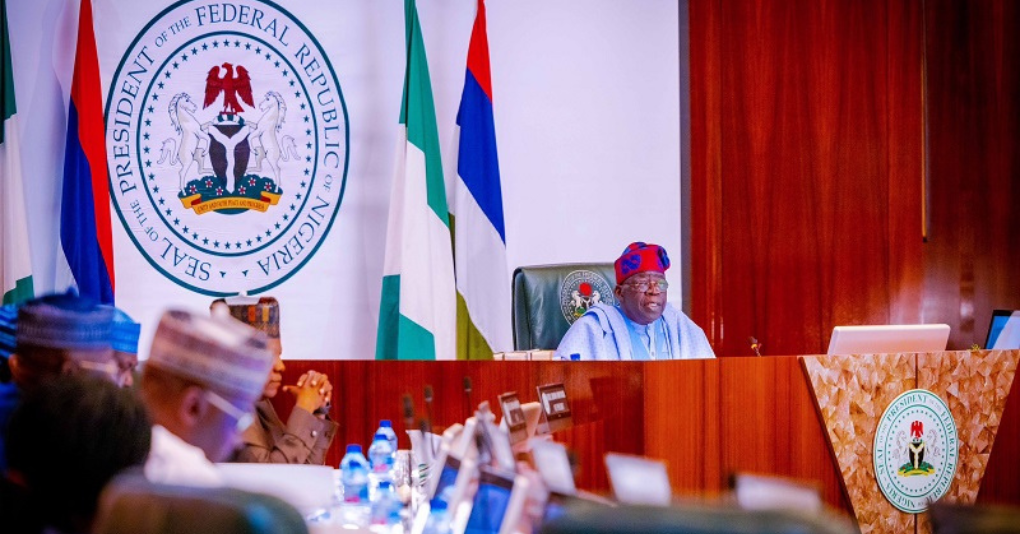
President Bola Ahmed Tinubu has commissioned Africa’s first renewable energy college, the Barefoot Renewable Energy College, Osara (BARECKS), and the Green Hydrogen Research and Demonstration Pilot Plant in Kogi State, as Nigeria seeks to build the technical workforce needed for its clean-energy transition.
Vice President Kashim Shettima commissioned the facilities on behalf of the President on Tuesday at the Confluence University of Science and Technology, Osara, Kogi State.
The President described the college as a world-class institution completed to international standards, saying it would help address Nigeria’s longstanding challenge of converting its abundant renewable energy resources into electricity, jobs and economic opportunities.
What they are saying
Tinubu said Nigeria is abundantly endowed with sunlight, wind, biomass and water, but has struggled to convert those resources into megawatts and jobs.
“This is the first institution of its kind on the African continent, modelled on the celebrated vocational colleges of India that turned unlettered grandmothers into solar engineers.”
“If that method could light the villages of Rajasthan, it can light the settlements of Kogi, Ondo and Cross River. Nigeria assumes, from today, the position of pacesetter in renewable energy capacity development across Africa.”
“Our continent has never suffered a deficit of intention. We have suffered the scarcity of hands trained to execute them.”
Speaking through Shettima, Tinubu said the college was designed as a vocational and technical institution to address what he described as the widest gap in Africa’s energy transition — the shortage of competent technical manpower.
Tinubu said the college would train technicians, installers, operators and maintenance professionals with practical skills in renewable energy technologies.
He also called on development partners, private-sector organisations, international institutions and research bodies to collaborate with the college in expanding research, innovation and technical training.
The President said the speed of the project’s completion was significant, noting that Nigerians had become accustomed to projects whose completion often takes longer than the tenure of those who initiated them.
“Two years ago, we stood on this ground for the groundbreaking of this institution, with red earth underfoot and the ambition of a few determined Nigerians for company. Today, we stand before a world-class edifice, completed to international standards,” he said.
What you should know
Nigeria’s Energy Transition Plan (ETP) outlines a roadmap to achieve net-zero emissions by 2060, but experts say implementation remains slow, particularly in rural electrification and off-grid solar.
Data from the Rural Electrification Agency (REA) indicates that the country needs at least 5 million off-grid solar systems to serve unpowered and underserved communities.
Media earlier reported that financial flows to developing countries, including Nigeria, for clean energy projects have surged to $21.57 billion.
Some energy and climate experts have urged the Nigerian government to deepen investments and introduce stronger policy incentives for large-scale solar installations nationwide, noting that such efforts could unlock an estimated $2.5 billion carbon market opportunity for the country.
In September 2025, the European Union (EU) unveiled a €545 million package to scale up renewables investment in Africa.
Share this post





Be the first to comment on this post