Kaduna Govt Targets over 32,000 Graduates for Vocational Skills Training

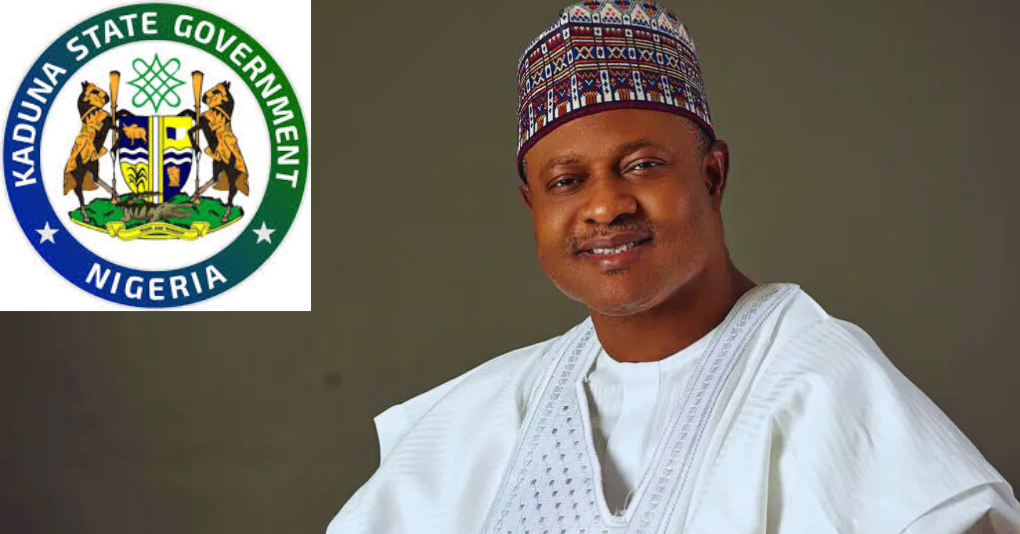
The Kaduna State Government says it plans to train and graduate about 32,000 learners annually through its newly established Institute of Vocational Training and Skills Development as part of efforts to tackle unemployment and build a skilled workforce in the state.
Sep. 29th 2025
Kaduna Govt Targets over 32,000 Graduates for Vocational Skills Training


The Kaduna State Government says it plans to train and graduate about 32,000 learners annually through its newly established Institute of Vocational Training and Skills Development as part of efforts to tackle unemployment and build a skilled workforce in the state.

Commissioned by President Bola Ahmed Tinubu in June, the Institute has campuses at Rigachikun, Soba, and Samaru Kataf, all equipped with modern training facilities.

The centres will focus on providing lifelong, practical, and globally competitive skills for learners across Kaduna State and beyond.

Learners can enrol in any of the 14 trade areas accredited by the National Board for Technical Education.

These include painting and decoration, masonry, tiling, plumbing, carpentry and joinery, welding and fabrication, electrical installation, aluminum fabrication, refrigeration & air conditioning, solar installation, mechatronics, computer hardware repairs and maintenance, catering and hospitality, and fashion design.

Speaking on the significance of the institute on Friday, the Commissioner for Information, Malam Ahmed Maiyaki, described the Institute as “a bold step towards youth empowerment and economic growth.”

“This Institute is a bold step of the Kaduna State Government’s commitment to skills acquisition, youth empowerment, and economic growth.

“The 14 trade areas are carefully selected to address critical manpower needs in construction, energy, ICT, hospitality, and the creative industries.

We are confident that graduates of this Institute will not only find employment but also become self-employed and create opportunities for others,” he said.

He added that under the Nigeria Skills Qualification Framework, the training model delivers 80 per cent hands-on practical sessions in workshops and workplace settings.

Enrolment, he said, is open year-round, with morning and afternoon shifts to expand access, while noting that “the programme will give special consideration to women, persons with disabilities, and vulnerable groups such as the Almajiris.”

Short-term courses of three months will lead to NSQ Unit Certificates or Institute Competence Certificates, while medium- and long-term programmes lasting six to twelve months will culminate in full NSQ qualifications at Levels 2–4.

The Provost of the institute, Malam Husaini Haruna Muhammad, explained that the training was designed to produce graduates who are job-ready and globally competitive.

“Our focus is on producing graduates who are workplace-ready. With 80 per cent of training being practical, our learners gain real-life competencies in their chosen trades. These skills are not only relevant to Nigeria’s economy but also competitive on the global stage. We encourage citizens — especially women, persons with disabilities, and vulnerable youths — to take advantage of this opportunity,” he said.

The State Government said the teaching model combines qualified instructors, master craftsperson, and retired industry practitioners to ensure learners benefit from both theoretical knowledge and decades of practical experience.

With full NBTE accreditation, the Institute is part of the Federal Government’s Technical and Vocational Education and Training initiative.

It began operations with an initial intake of about 2,000 learners and targeted 16,000 graduates in its first training phase, before moving to its annual target of 32,000 learners.

Share this post

0 Comment

    Be the first to comment on this post

Leave a comment

More Blog Posts
Image Oct 26th. 2026

Rotary Club partners National Library to Support 200 Lagos Students with Literacy, Leadership Lessons

 The Rotary Club of Ogudu GRA, in partnership with the National Library of Nigeria, has encoura......

Continue Reading

Image Oct 26th. 2026

Abia Governor Awards Victorious Students from The International Debate Competition

 Abia State Governor Alex Otti has awarded a cash gift of N1 million each to the five students......

Continue Reading

Image Oct 26th. 2026

AGILE Improves Learning Conditions for 778,000 Students in Katsina

 The World Bank-supported Adolescent Girls Initiative for Learning and Empowerment (AGILE) Proj......

Continue Reading

Image Oct 26th. 2026

FCTA Pressed to Establish Funding Mechanism for Primary Education

 The Chairman of the Confederation of the Parents Teachers Association (CPTA), Abuja Municipal......

Continue Reading

--> Kaduna Govt Targets over 32,000 Graduates for Vocational Skills Training - Boldscholar News

Kaduna Govt Targets over 32,000 Graduates for Vocational Skills Training

The Kaduna State Government says it plans to train and graduate about 32,000 learners annually through its newly established Institute of Vocational Training and Skills Development as part of efforts to tackle unemployment and build a skilled workforce in the state.
Sep. 29th 2025
Kaduna Govt Targets over 32,000 Graduates for Vocational Skills Training


The Kaduna State Government says it plans to train and graduate about 32,000 learners annually through its newly established Institute of Vocational Training and Skills Development as part of efforts to tackle unemployment and build a skilled workforce in the state.

Commissioned by President Bola Ahmed Tinubu in June, the Institute has campuses at Rigachikun, Soba, and Samaru Kataf, all equipped with modern training facilities.

The centres will focus on providing lifelong, practical, and globally competitive skills for learners across Kaduna State and beyond.

Learners can enrol in any of the 14 trade areas accredited by the National Board for Technical Education.

These include painting and decoration, masonry, tiling, plumbing, carpentry and joinery, welding and fabrication, electrical installation, aluminum fabrication, refrigeration & air conditioning, solar installation, mechatronics, computer hardware repairs and maintenance, catering and hospitality, and fashion design.

Speaking on the significance of the institute on Friday, the Commissioner for Information, Malam Ahmed Maiyaki, described the Institute as “a bold step towards youth empowerment and economic growth.”

“This Institute is a bold step of the Kaduna State Government’s commitment to skills acquisition, youth empowerment, and economic growth.

“The 14 trade areas are carefully selected to address critical manpower needs in construction, energy, ICT, hospitality, and the creative industries.

We are confident that graduates of this Institute will not only find employment but also become self-employed and create opportunities for others,” he said.

He added that under the Nigeria Skills Qualification Framework, the training model delivers 80 per cent hands-on practical sessions in workshops and workplace settings.

Enrolment, he said, is open year-round, with morning and afternoon shifts to expand access, while noting that “the programme will give special consideration to women, persons with disabilities, and vulnerable groups such as the Almajiris.”

Short-term courses of three months will lead to NSQ Unit Certificates or Institute Competence Certificates, while medium- and long-term programmes lasting six to twelve months will culminate in full NSQ qualifications at Levels 2–4.

The Provost of the institute, Malam Husaini Haruna Muhammad, explained that the training was designed to produce graduates who are job-ready and globally competitive.

“Our focus is on producing graduates who are workplace-ready. With 80 per cent of training being practical, our learners gain real-life competencies in their chosen trades. These skills are not only relevant to Nigeria’s economy but also competitive on the global stage. We encourage citizens — especially women, persons with disabilities, and vulnerable youths — to take advantage of this opportunity,” he said.

The State Government said the teaching model combines qualified instructors, master craftsperson, and retired industry practitioners to ensure learners benefit from both theoretical knowledge and decades of practical experience.

With full NBTE accreditation, the Institute is part of the Federal Government’s Technical and Vocational Education and Training initiative.

It began operations with an initial intake of about 2,000 learners and targeted 16,000 graduates in its first training phase, before moving to its annual target of 32,000 learners.

Share this post
0 Comment

    Be the first to comment on this post

Leave a comment

More Blog Posts
Image Oct 26th. 2026

Rotary Club partners National Library to Support 200 Lagos Students with Literacy, Leadership Lessons

 The Rotary Club of Ogudu GRA, in partnership with the National Library of Nigeria, has encoura......

Continue Reading

Image Oct 26th. 2026

Abia Governor Awards Victorious Students from The International Debate Competition

 Abia State Governor Alex Otti has awarded a cash gift of N1 million each to the five students......

Continue Reading

Image Oct 26th. 2026

AGILE Improves Learning Conditions for 778,000 Students in Katsina

 The World Bank-supported Adolescent Girls Initiative for Learning and Empowerment (AGILE) Proj......

Continue Reading

Image Oct 26th. 2026

FCTA Pressed to Establish Funding Mechanism for Primary Education

 The Chairman of the Confederation of the Parents Teachers Association (CPTA), Abuja Municipal......

Continue Reading

-->