348 vice chancellors of the nation’s universities under the aegis of Committee of Vice Chancellors of Nigerian Universities (CVCNU) yesterday converged in Ilorin, Kwara State capital to strategise on the future of the nation’s varsities.
The gathering is expected draw a “map” by which the varsities can compete with their contemporaries across the globe.
The CVCNU 37th Annual General Assembly conference themed: “Building Resilient Universities for Nigeria,” held at the main auditorium of the University of Ilorin.
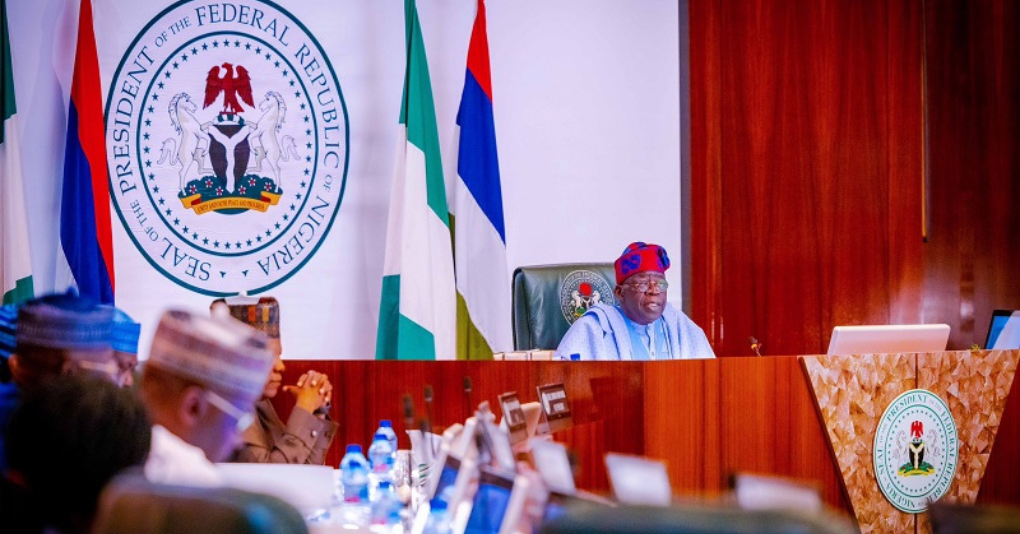
The special guest of honour, President Bola Ahmed Tinubu, in his address at the conference, charged Nigerian universities to go beyond traditional focus on awarding degrees and reposition themselves as centres of innovation, practical skills, research and national development.
Represented by the Minister of State for Education, Prof Suwaibat Saidu Ahmad, Tinubu said the country could not achieve sustainable economic transformation without corresponding investment in human capital.
He described universities as critical partners in the federal government’s development agenda, stressing that they must produce graduates capable of responding to the realities of a rapidly changing global economy.
“Universities are more than institutions where degrees are awarded. They are centres of knowledge creation, innovation, critical thinking, entrepreneurship, cultural development and national transformation,” he said.
According to him, Nigerian universities must produce graduates who are not only academically sound but also innovative, ethical, digitally competent, entrepreneurial, adaptable and capable of solving real-world problems.
He challenged university authorities to reconsider the quality and relevance of graduates being produced, particularly in an era dominated by artificial intelligence, automation, biotechnology, data science, renewable energy and advanced manufacturing.
“The question before us is no longer simply whether our universities are producing graduates. The more foundational question is: what kind of graduates are we producing? How effectively are our universities preparing them to contribute to Nigeria’s economic and social transformation?” he asked.
Tinubu said his administration was pursuing reforms aimed at improving the quality, relevance, accessibility, affordability and accountability of tertiary education.
He explained that the Federal Ministry of Education was implementing the Nigerian Education Sector Renewal Initiative, with particular attention to institutional governance, quality assurance, research and innovation, digital transformation, skills development and stronger university-industry linkages.
The president called for stronger practical training in Nigerian universities, saying that academic knowledge must be complemented by hands-on experience.
He disclosed that the government had begun reviewing curricular, particularly in agriculture, to shift the emphasis from theory to practical training.
“We are moving away from 70 per cent theory and 30 per cent practical to a robust 80 per cent practical and 20 per cent theory,” he said.
He added that accreditation requirements would now compel universities, faculties and departments of agriculture to establish partnerships with relevant industries with students expected to undertake industrial attachments throughout their academic programmes.
According to him, the same approach would gradually be extended to other disciplines through the review of the Core Curriculum and Minimum Academic Standards (CCMAS).
Tinubu further urged vice-chancellors to strengthen research partnerships with government, industry, development partners and communities so that research findings could be transformed into products, services, policies, technologies and practical solutions to national challenges.
“Nigeria cannot become a globally competitive economy by relying primarily on the consumption of knowledge generated elsewhere,” he said.
“Our universities must become powerful engines of research, innovation, technology development and entrepreneurship,” he said.
Tinubu also emphasised the importance of effective university governance, urging CVCNU to strengthen accountability, improve institutional planning and deploy public resources prudently.
He noted that vice-chancellors were not only academic leaders but also managers, employers, financial stewards, community leaders and strategic partners in national development.
“Leadership, vice-chancellorship, is not about research. It is about administrative skills. It is about the ability to manage both research and humans at the same time,” he said.
On graduate employability, Tinubu said universities must ensure that their curricula reflected the changing demands of the labour market.
He urged institutions to strengthen internships, entrepreneurship programmes, work-based learning and university-industry partnerships, saying graduates should leave university not merely as job seekers but as value creators, innovators, entrepreneurs, professionals, researchers and responsible citizens.
The president commended the CVCNU for sustaining the annual platform for dialogue and collaboration and congratulated the University of Ilorin for hosting the conference.
He declared the conference officially open, urging participants to use the gathering to build a more competitive, innovative, inclusive and responsible university system.
Also speaking, the Chairman of the Committee of Vice Chancellors of Nigerian Universities (CVCNU) and Vice-Chancellor of Igbinedion University, Okada, Prof. Lawrence Ikechukwu Ezemonye, said the Nigerian university system had reached a critical point where mere survival was no longer sufficient.
Ezemonye said universities must transform themselves into centres of innovation, ethical leadership, research and national development rather than remain detached from the needs of society.
“We meet at an hour when the Nigerian university is being tested as it has seldom been tested since the years immediately after independence. The test is not of our survival, for we have survived much. It is of our relevance to a young, restless and expectant nation,” he said.
He said the resilience of universities must go beyond coping with inadequate funding, industrial disputes, population pressures, technological disruption and the migration of skilled academics.
According to him, resilient universities must be able to adapt to emerging realities while retaining their core responsibilities of teaching, research, character formation and service to society.
He identified governance and financial sustainability, artificial intelligence and technology-driven transformation, university-government-industry relations, as well as human capital, academic excellence and the welfare of students and staff as critical areas requiring urgent attention.
Ezemonye warned that Nigeria could not achieve sustainable development without a strong university system capable of producing the professionals, researchers and leaders required to drive the economy.
“Those institutions have produced the doctors who staff our hospitals, the engineers who build our infrastructure, the lawyers who argue our cases, the scientists who conduct our research, the administrators who govern our public institutions and the leaders who have shaped our national life,” he said.
He, however, cautioned that the country could not continue to depend on the achievements of previous generations, stressing that universities must be repositioned to respond to artificial intelligence, demographic growth and increasing global competition.
“Inheritance is not destiny,” Ezemonye declared, urging university authorities to rebuild their institutions to become “fit for purpose” in the emerging global environment.
The CVCNU chairman also called for a change in the perception of universities as isolated “Ivory Towers”, saying they should instead serve as innovation engines, knowledge centres, community anchors and the nation’s compass for ethical leadership.
He urged participants at the conference to confront the challenges facing the sector honestly and produce practical, evidence-based solutions.
“The challenges before us are too grave and too urgent to be obscured by politeness or deference. We must speak plainly about the failures of the past and the demands of the future,” he said.
Executive Secretary of the National Universities Commission (NUC), Prof. Abdullahi Yusufu Ribadu in his remarks, warned universities against violating newly approved regulatory guidelines, particularly on the conferment of honorary doctorate degrees.
Ribadu said universities must not award more than three honorary doctorates at a single convocation and warned that serving public office holders should not be recipients of such honours under the new guidelines.
“It has been bastardised in the past. So, for now, we say please, you are doing well. When you leave office, the university will honour you,” he said.
The NUC boss disclosed that institutions that breach the guidelines could face sanctions, including suspension or refusal of resource verification for new academic programmes for up to two years.
“One of which is suspension or refusal by NUC to do resource verification for new programmes,” he said.
He warned that the sanction could affect universities seeking approval for programmes in emerging fields such as artificial intelligence, data science and robotics.
Earlier, the guest speaker of the conference, the former Vice Chancellor of the University of Ilorin and former Registrar of the Joint Admissions and Matriculation Board (JAMB), Prof. Is-haq Oloyede, challenged Nigerian universities to move beyond merely surviving recurring challenges and deliberately redesign their institutions to withstand disruption, drive innovation and deliver greater value to society.
Speaking on the theme, “Reimaging Nigerian Universities for Resilience: Leadership, Innovation and Sustainability in a Disruptive Era,” Oloyede said Nigeria’s university system must redefine resilience as the capacity to anticipate risks, adapt intelligently and transform institutions rather than simply endure persistent shortages and dysfunction.
He said the conference theme, “Building Resilient Universities for Nigeria,” was timely, given the growing pressures confronting universities, including funding constraints, rapid technological change, insecurity, climate stress, demographic growth, industrial disputes, public distrust and changing labour market demands.
According to him, “Resilience is therefore not stubborn endurance. It is structured adaptation and disciplined renewal.”
Oloyede, who described leadership as “the first infrastructure of resilience”, argued that no amount of physical infrastructure or technology could compensate for weak governance, poor judgement and a culture of impunity.
He urged Vice-Chancellors and governing councils to build institutions that would outlive individual office holders, stressing that strategic plans must guide budgets, appointments, infrastructure development, partnerships and performance evaluation rather than remain ceremonial documents.
Share this post



Be the first to comment on this post