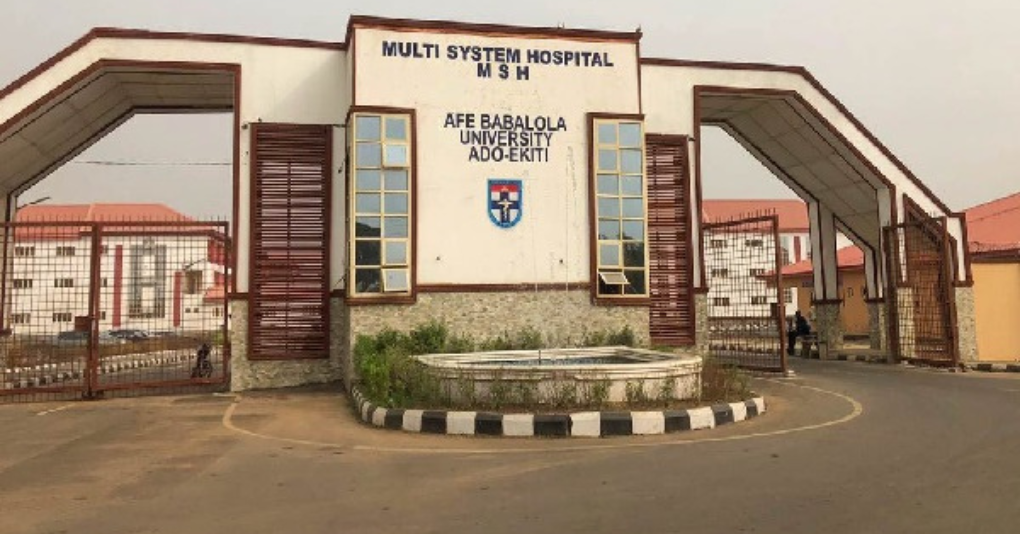
Afe Babalola University, Ado-Ekiti (ABUAD) with support from the British Council, successfully hosted the “EcoScriber Capacity-Building Programme for University Administrators programme”.
The programme is a landmark sustainable campus initiative aimed at creating green, carbon-neutral and paperless workflow in higher education institutions in line with the United Nations Sustainable Development Goals (SDGs).
The programme, organised by the Institute for Oil, Gas, Energy, Environment and Sustainable Development (OGEES Institute) at ABUAD and held at the university’s Senate Chambers, brought together university administrators, sustainability professionals, information and communication technology (ICT) experts, student innovators, digital media practitioners and participants from other higher education institutions.
The themed was “From Paper to Digital: Optimising Administrative Processes for Sustainable Higher Education,” the high-level awareness event focused on strengthening administrative efficiency, reducing dependence on paper-based workflows, improving memo tracking, encouraging responsible digital practices and promoting evidence-based sustainability reporting in Nigerian universities.
In a welcome remark, the Vice-Chancellor of ABUAD, Prof. Elisabeta Smaranda Olarinde, commended and appreciated the British Council for supporting the initiative and commended the OGEES Institute, Sustainability Innovation Hub, project team, student innovators and all participating administrators.
She noted that EcoScriber responds to a real administrative challenge in higher education, where many institutions still rely heavily on printed memoranda, physical files, manual routing and repeated paper use.
According to her, sustainable administration must now become part of daily university operations, especially for institutions that seek to remain efficient, accountable and globally competitive.
Prof. Olarinde also linked the programme to the vision of the Founder of ABUAD, Aare Afe Babalola (SAN), to build an excellent, innovative, responsible and sustainable university.
She further noted that ABUAD’s recognition as first in Nigeria for sustainability impact for four consecutive years, third in Africa and 84th in the world places a responsibility on the university to ensure that its administrative systems reflect global standards of efficiency, evidence and accountability.
Delivering the opening remarks, the Deputy Vice-Chancellor, Research, Innovation and Strategic Partnerships, and Director of OGEES Institute, Prof. Damilola Olawuyi (SAN), described the programme as an important step towards strengthening sustainable administrative practice in higher education.
Olawuyi emphasised that sustainability is not only about environmental policies, but also about how universities manage documents, reduce waste, track decisions, preserve records and generate evidence for institutional learning and reporting.
According to him “By exemplifying our institutional commitment as a green and sustainable university, ABUAD is well placed to remain at the fore front of global best practices on sustainability impact, eco-entrepreneurship and preparing young leaders who will solve the complex environmental challenges facing our world,” he concluded.
The British Council Programme Manager, Mr. Tosin Adeoti, also addressed participants on the Innovation for African Universities initiative, explaining that EcoScriber forms part of a broader British Council-supported effort to promote innovation, entrepreneurship and practical problem-solving across African universities.
He noted that EcoScriber would be presented alongside other innovation projects at a final pitch in Ghana in May 2026.
The technical sessions began with a hands-on presentation by Mr. Abraham Adeniran, Innovation Lead, OGEES Institute, on “Using AI and Digital Workflow Tools to Manage Administrative Tasks.”
The session highlighted the weaknesses of paper-heavy administrative systems in many Nigerian institutions, including poor document tracking, repeated printing, delayed approvals, weak evidence capture and avoidable environmental impact.
Participants were introduced to practical ways of using AI tools such as ChatGPT, Gemini and similar platforms to support memo drafting, email improvement, document summarisation, meeting action points and report structuring.
The Registrar of ABUAD, Lady Christie Oluborode, delivered a presentation on “Basic Administrative Skills: Practical Foundations for Efficient University Administration.”
She emphasised the importance of communication, drafting, record-keeping, time management, meeting management, confidentiality, etiquette and ethics in university administration.
She reminded participants that technology can only support good administration where administrators already value order, discretion, due process and institutional discipline.
In her main lecture on “Sustainability Imperative in University Administration,” Prof. Olarinde explained that sustainable administration is now a governance responsibility.
She noted that every unnecessary printout, delayed file, untraceable document, duplicated memo and weak record-keeping habit carries financial, environmental, reputational and institutional costs.
She called on administrators to become custodians of ABUAD’s excellence by supporting efficient, evidence-based and less wasteful administrative systems.
The final lecture, delivered by Prof. Bayo Ogundipe, focused on “Basic Digital Skills and Readiness for University Administrators.”
He explained that digital readiness does not require every administrator to become an ICT expert, but requires every officer to develop enough digital confidence to work effectively in a modern university environment.
His presentation covered word processing, official email etiquette, digital filing, scanning, spreadsheets, online meeting support, cyber security awareness and responsible use of AI tools.
The programme also featured an interactive session where participants raised questions on digital adoption, paper-based approval culture, confidentiality, staff readiness, AI use, data protection and the practical implementation of paperless systems in university administration.
At the end of the programme, participants expressed strong interest in further hands-on training and future onboarding on EcoScriber.
The organisers noted that a dedicated EcoScriber demonstration and onboarding session would follow as part of the broader programme series.
The EcoScriber Capacity-Building Programme marks an important step in ABUAD’s continuing effort to promote sustainable, efficient and evidence-driven university administration.
It also reinforces the role of Nigerian universities in leading practical innovation that responds to institutional needs, reduces waste and improves accountability.
The event recorded strong participation, with more than 300 registrants (both in person and online) including participants from ABUAD, the University on the Niger, Obafemi Awolowo University, Admiralty University of Nigeria, Hamad Bin Khalifa University, Qatar, Durban University of Technology, South Africa, and the National Institute for Legislative and Democratic Studies (NILDS) amongst others.
Share this post





Be the first to comment on this post