18-year-old Nigerian Student Builds Groundbreaking AI App

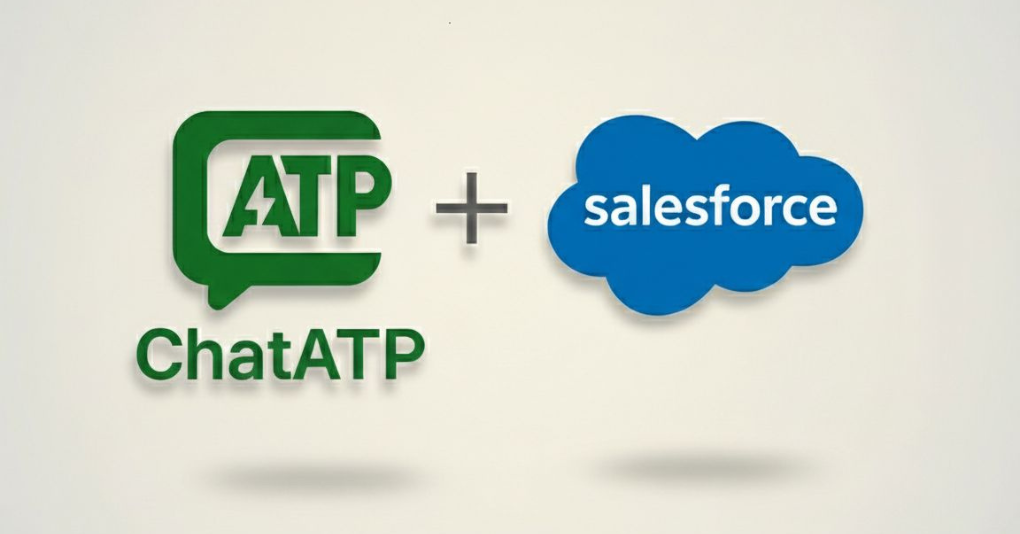
Obinna Chimdi, a Mathematics and Computer Science student at the University of Port Harcourt (UNIPORT), Nigeria, has built an AI agent called ChatATP to make it possible for ChatGPT to book flights directly. ChatATP acts as a layer between the airlines’ website and ChatGPT, enabling the chatbot to carry out actions on the site so users can simply type prompts to perform tasks.
Oct. 2nd 2025
18-year-old Nigerian Student Builds Groundbreaking AI App


ChatATP allows users chat with any website to perform actions.

If you tell ChatGPT to book a flight for you, it will respond by saying it does not have the capacity to do that. But it can tell you how to go about it, which airlines have the best options and how to book a ticket successfully.

However, Obinna Chimdi, a Mathematics and Computer Science student at the University of Port Harcourt (UNIPORT), Nigeria, has built an AI agent called ChatATP to make it possible for ChatGPT to book flights directly. ChatATP acts as a layer between the airlines’ website and ChatGPT, enabling the chatbot to carry out actions on the site so users can simply type prompts to perform tasks.

At just 18 years old, Chimdi built ChatATP after struggling to find collaborators. “Everyone I wanted to work with declined. They were very busy,” he told journalists on a call.

The idea he presented to prospective co-founders was straightforward: build something that makes large language models like ChatGPT do more than just chat with users — something that allows them to perform actions outside the confines of chatgpt.com.


Building ChatATP

Chimdi began learning programming at 16. “I started programming with my dad’s mobile phone,” he said. Within three months, he had completed his first project, teaching himself along the way.

His motivation stemmed from his admiration for Mark Zuckerberg. “He was my idol,” Chimdi explained. “I loved automations too, I wanted to have my own AI company, and I had to learn how.” Inspired, he built a social media platform called Wall Street, which was designed to connect business people.

ChatATP is Chimdi’s most ambitious project yet. The platform took him six months to build because he had to upskill along the way.

“I’m a backend developer; I could not find any frontend developers, so I had to learn. I couldn’t even get UI and UX designers.”

But Chimdi’s frustration with large language models was bigger than the difficulty of finding co-founders.

“I realised that tools like ChatGPT are powerful, but they’re not built to solve problems end-to-end,” he said. “If you ask them to analyse data and send the report to someone by email, for example, they stop halfway. You still need to copy, paste, or do the rest yourself.”

That gap led him to experiment with combining different AI models and adding execution layers on top. The result was ChatATP, an AI that doesn’t just answer but also acts. Think of it as giving ChatGPT arms and legs to actually get things done. 


How ChatATP works: HTTP for AI

Since AI is smart enough to understand us or at least predict what we might be saying, Chimdi thought it was a good idea to give it the ability to “connect to the real world,” as he put it.

To achieve this, he created toolkits that serve as a layer between a website and an LLM such as ChatGPT, Gemini, or Claude.

Essentially, a toolkit acts like a translator. It is a small, purpose-built connector that exposes specific actions. For example, checking flight availability, sending an email from Gmail, creating a contact in HubSpot, or querying a university timetable. Each toolkit defines the inputs it needs, the outputs it returns, and the safety rules it requires.

However, the toolkits are just a small part of the equation. The centrepiece is the Agents2 protocol Chimdi had to build.

He describes Agents2 as “HTTP for AI agents” — a simple, universal protocol that defines how models and toolkits talk to each other. Just as HTTP standardised how browsers fetch web pages, Agents2 standardises how AI agents call tools, making them interoperable and scalable.

ChatATP is very much a developer’s tool. Unlike YarnGPT or Decide, ChatATP requires a level of technical know-how.

To get started, a user must first configure an API key from any major LLM provider, install and enable domain-specific tool kits, and choose the model they want powering their agent. After that, website visitors simply type natural-language prompts, and the system reasons through the chosen model and tool kits to deliver results.


Who is using ChatATP?

ChatATP’s traction depends on the number of websites that integrate it. So far, Chimdi has only managed to onboard three people — his neighbour and two course mates. He hopes to attract more users, but that would mean spending more money on compute — money he doesn’t currently have.

He could try to raise funding, but three users who happen to be neighbours and classmates would hardly impress investors. And in a world where AI advances daily, staying ahead of the competition is almost impossible without resources.

That competition is fierce. Open-source projects like AutoGPT and LangGraph already allow developers to spin up autonomous agents, chain multiple tools together, and execute complex workflows, often without requiring major infrastructure.

Newer entrants such as Lumio AI are building multi-model workspaces where users can switch between GPT-4, Claude, Gemini, or Mistral and compare outputs in real time.

These products not only have strong developer communities but also significant funding — something ChatATP lacks. Against this backdrop, three users amount to little more than a proof-of-concept.

Share this post

0 Comment

    Be the first to comment on this post

Leave a comment

More Blog Posts
Image Aug 19th. 2026

Chunks Microlearning App : From Scrolling to Learning

 In a digital world dominated by endless scrolling and short-form entertainment, Chunks Microle......

Continue Reading

Image Aug 4th. 2026

EdTech Founder Unveils AI School Platform to Transform Education Administration

 Nigerian software engineer and technology founder, Ajibola Olajide Shokunbi, has launched EDUC......

Continue Reading

Image Jul 7th. 2026

Darsel App Simplifying Mathematics One Equation at a Time

Darsel is an education technology nonprofit on a mission to improve learning outcomes in low-resourc......

Continue Reading

Image Jun 3rd. 2026

Storybird App: A Creative tool for young writers

 In an era where technology is increasingly shaping how children learn, the Storybird app stand......

Continue Reading

--> 18-year-old Nigerian Student Builds Groundbreaking AI App - Boldscholar News

18-year-old Nigerian Student Builds Groundbreaking AI App

Obinna Chimdi, a Mathematics and Computer Science student at the University of Port Harcourt (UNIPORT), Nigeria, has built an AI agent called ChatATP to make it possible for ChatGPT to book flights directly. ChatATP acts as a layer between the airlines’ website and ChatGPT, enabling the chatbot to carry out actions on the site so users can simply type prompts to perform tasks.
Oct. 2nd 2025
18-year-old Nigerian Student Builds Groundbreaking AI App


ChatATP allows users chat with any website to perform actions.

If you tell ChatGPT to book a flight for you, it will respond by saying it does not have the capacity to do that. But it can tell you how to go about it, which airlines have the best options and how to book a ticket successfully.

However, Obinna Chimdi, a Mathematics and Computer Science student at the University of Port Harcourt (UNIPORT), Nigeria, has built an AI agent called ChatATP to make it possible for ChatGPT to book flights directly. ChatATP acts as a layer between the airlines’ website and ChatGPT, enabling the chatbot to carry out actions on the site so users can simply type prompts to perform tasks.

At just 18 years old, Chimdi built ChatATP after struggling to find collaborators. “Everyone I wanted to work with declined. They were very busy,” he told journalists on a call.

The idea he presented to prospective co-founders was straightforward: build something that makes large language models like ChatGPT do more than just chat with users — something that allows them to perform actions outside the confines of chatgpt.com.


Building ChatATP

Chimdi began learning programming at 16. “I started programming with my dad’s mobile phone,” he said. Within three months, he had completed his first project, teaching himself along the way.

His motivation stemmed from his admiration for Mark Zuckerberg. “He was my idol,” Chimdi explained. “I loved automations too, I wanted to have my own AI company, and I had to learn how.” Inspired, he built a social media platform called Wall Street, which was designed to connect business people.

ChatATP is Chimdi’s most ambitious project yet. The platform took him six months to build because he had to upskill along the way.

“I’m a backend developer; I could not find any frontend developers, so I had to learn. I couldn’t even get UI and UX designers.”

But Chimdi’s frustration with large language models was bigger than the difficulty of finding co-founders.

“I realised that tools like ChatGPT are powerful, but they’re not built to solve problems end-to-end,” he said. “If you ask them to analyse data and send the report to someone by email, for example, they stop halfway. You still need to copy, paste, or do the rest yourself.”

That gap led him to experiment with combining different AI models and adding execution layers on top. The result was ChatATP, an AI that doesn’t just answer but also acts. Think of it as giving ChatGPT arms and legs to actually get things done. 


How ChatATP works: HTTP for AI

Since AI is smart enough to understand us or at least predict what we might be saying, Chimdi thought it was a good idea to give it the ability to “connect to the real world,” as he put it.

To achieve this, he created toolkits that serve as a layer between a website and an LLM such as ChatGPT, Gemini, or Claude.

Essentially, a toolkit acts like a translator. It is a small, purpose-built connector that exposes specific actions. For example, checking flight availability, sending an email from Gmail, creating a contact in HubSpot, or querying a university timetable. Each toolkit defines the inputs it needs, the outputs it returns, and the safety rules it requires.

However, the toolkits are just a small part of the equation. The centrepiece is the Agents2 protocol Chimdi had to build.

He describes Agents2 as “HTTP for AI agents” — a simple, universal protocol that defines how models and toolkits talk to each other. Just as HTTP standardised how browsers fetch web pages, Agents2 standardises how AI agents call tools, making them interoperable and scalable.

ChatATP is very much a developer’s tool. Unlike YarnGPT or Decide, ChatATP requires a level of technical know-how.

To get started, a user must first configure an API key from any major LLM provider, install and enable domain-specific tool kits, and choose the model they want powering their agent. After that, website visitors simply type natural-language prompts, and the system reasons through the chosen model and tool kits to deliver results.


Who is using ChatATP?

ChatATP’s traction depends on the number of websites that integrate it. So far, Chimdi has only managed to onboard three people — his neighbour and two course mates. He hopes to attract more users, but that would mean spending more money on compute — money he doesn’t currently have.

He could try to raise funding, but three users who happen to be neighbours and classmates would hardly impress investors. And in a world where AI advances daily, staying ahead of the competition is almost impossible without resources.

That competition is fierce. Open-source projects like AutoGPT and LangGraph already allow developers to spin up autonomous agents, chain multiple tools together, and execute complex workflows, often without requiring major infrastructure.

Newer entrants such as Lumio AI are building multi-model workspaces where users can switch between GPT-4, Claude, Gemini, or Mistral and compare outputs in real time.

These products not only have strong developer communities but also significant funding — something ChatATP lacks. Against this backdrop, three users amount to little more than a proof-of-concept.

Share this post

0 Comment

    Be the first to comment on this post

Leave a comment

More Blog Posts
Image Aug 19th. 2026

Chunks Microlearning App : From Scrolling to Learning

 In a digital world dominated by endless scrolling and short-form entertainment, Chunks Microle......

Continue Reading

Image Aug 4th. 2026

EdTech Founder Unveils AI School Platform to Transform Education Administration

 Nigerian software engineer and technology founder, Ajibola Olajide Shokunbi, has launched EDUC......

Continue Reading

Image Jul 7th. 2026

Darsel App Simplifying Mathematics One Equation at a Time

Darsel is an education technology nonprofit on a mission to improve learning outcomes in low-resourc......

Continue Reading

Image Jun 3rd. 2026

Storybird App: A Creative tool for young writers

 In an era where technology is increasingly shaping how children learn, the Storybird app stand......

Continue Reading

-->